
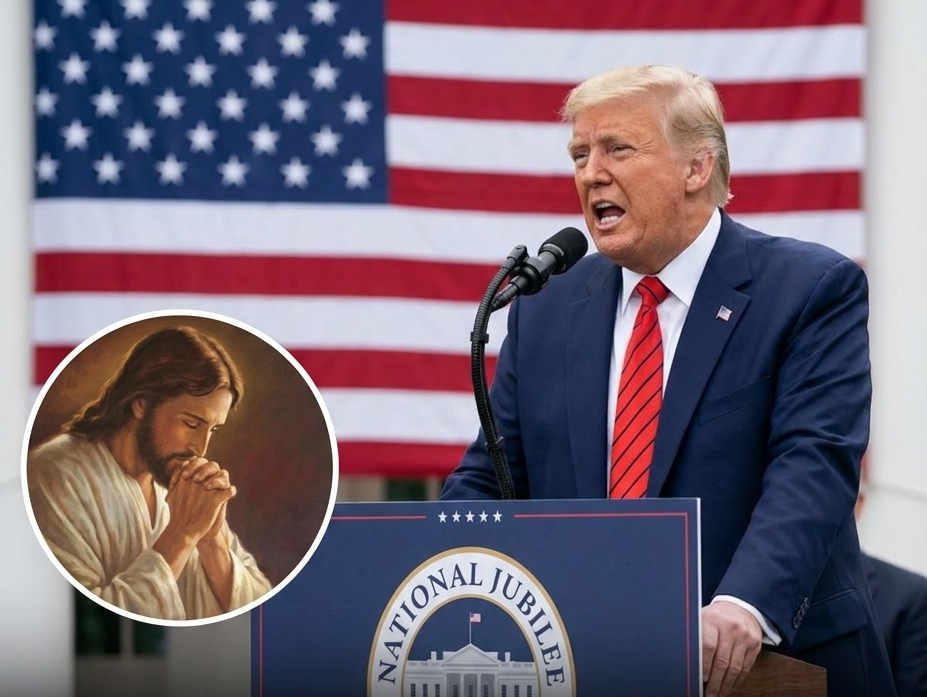
President Donald Trump used the 74th National Prayer Breakfast in Washington on Feb. 5, 2026, to cast prayer as America’s “superpower” and announce a National Jubilee of Prayer, Praise and Thanksgiving set for May 17 on the National Mall. The event comes as the United States heads toward its 250th anniversary, and Trump framed it as a nationwide call to rededicate the country to God.
The announcement places faith at the center of the administration’s semiquincentennial plans. It also turns a ceremonial gathering into a national invitation, with worship, Scripture, testimony, and prayer planned for one of the most visible public spaces in the country. That is no small thing.
Prayer And Patriotism On The National Mall
The May 17 gathering, billed as “Rededicate 250,” is designed as an all-day National Jubilee of Prayer, Praise and Thanksgiving. Organizers plan to bring together worship leaders, pastors, public officials, and believers from across the country for a time of praise and intercession in Washington.
Trump linked the event to the language of covenant and national gratitude, urging Americans to give thanks for 250 years of providential history and to seek God’s guidance for the future. He presented the day as a moment to renew commitment to biblical principles that, in this telling, shaped the nation’s moral framework from the beginning.
The White House has already been preparing for the anniversary year through a proclamation titled A Year of Celebration and Rededication, 2026. That document calls on religious communities to help lead prayer across the country, creating a wider seasonal rhythm that stretches beyond a single event in Washington.
A National Invitation To Prayer
The administration’s “America Prays” campaign gives that broader effort structure. It includes historical prayers, sermons, and presidential proclamations from the founding era, along with a suggested pattern for prayer built around adoration, contrition, thanksgiving, and supplication.
The campaign also points participants toward Bible passages such as 2 Chronicles 7:14, Psalm 33:12, and 1 Timothy 2:1-4. Those texts frame the initiative with a familiar biblical shape: humility before God, prayer for rulers, and dependence on divine favor rather than political strength alone.
Public prayer has long marked American religious life, but a sitting president calling for a national jubilee on the National Mall gives the moment unusual visibility. The symbolism is unmistakable. The nation is not only being invited to celebrate its history, but to kneel before God in the process.
Trump has also encouraged prayer at the local level, with weekly challenges, prayer networks, and focused intercession for leaders, families, communities, and freedoms. The effort is meant to move the event beyond spectacle and into sustained devotional practice.
A Broader Faith Agenda In The White House
The prayer jubilee also fits into a wider faith agenda that has marked Trump’s second term. The White House Faith Office now operates from the West Wing, giving religion a direct institutional home in the executive branch. A task force has also been created to address anti-Christian bias, reflecting a renewed emphasis on religious liberty concerns.
The administration has moved to protect faith expression in workplaces, schools, the military, hospitals, and public life. It has also taken action against religiously motivated financial discrimination, rolled back speech restrictions affecting chaplains, and expanded support for faith-based disaster relief groups.
Those moves have been paired with immigration and foreign policy measures aimed at defending persecuted Christians abroad. Aid has gone to Christian communities under pressure overseas, while visa restrictions have targeted abuses tied to religious freedom violations and violence.
Taken together, the steps show a broad conviction inside the administration that Christian belief belongs in public life, not at the margins of it. For many conservative believers, that marks a sharp break from years of suspicion toward public faith. For others, it raises fresh questions about how civil government and religious conviction should relate in a plural nation.
Church Leaders, Denominational Concerns, And A Public Moment
The Jubilee has already drawn attention from across the Christian world because it lands at a time when many churches are wrestling with decline, division, and public trust. A national call to prayer sounds familiar to believers who read 2 Chronicles 7:14 as a pattern for repentance and renewal. It also carries a public weight that few modern church gatherings can match.
Among the planned participants are Speaker Mike Johnson, worship leader Chris Tomlin, and actor Jonathan Roumie, whose portrayal of Jesus in The Chosen has made him recognizable to millions of Christian viewers. Their presence signals the event’s mix of worship, civic ceremony, and cultural reach.
That blend matters. American Christianity has often lived in tension between private devotion and public witness, and this event places both on display. Some denominations have long embraced national prayer gatherings as a healthy expression of gratitude and moral seriousness. Others have been more cautious, wary of collapsing the gospel into patriotism.
Still, the language of prayer running through the Jubilee is deeply familiar to historic Christianity. The call to humility, thanksgiving, and intercession echoes the New Testament’s instruction in 1 Timothy 2:1-4, where prayer for “all people” and “kings and all who are in high positions” sits at the heart of Christian public responsibility.
Faith, Freedom, And The Next 250 Years
Trump’s remarks in Iowa in July 2025 offered a preview of the current moment, stressing that national renewal would flow from stronger religion rather than from politics alone. That logic has now become the organizing idea behind the Jubilee and the surrounding year of rededication.
The White House has paired that message with family policy, religious freedom initiatives, and symbolic Holy Week and Easter statements that celebrate the resurrection of Jesus and the vitality of faith in America. The administration has also highlighted protection for prayer in public schools and support for religious expression in federal spaces.
For supporters, the significance is straightforward: a president is publicly treating prayer as essential to national life, not as a private afterthought. For churches, the event offers both opportunity and responsibility, since national attention can open doors for proclamation but can also blur spiritual aims if not held to biblical clarity.
As May 17 approaches, many believers are likely to see the National Mall gathering as more than a political rally or ceremonial observance. It will be a test of whether a nation can still gather in humility, lift its voice in prayer, and seek God’s mercy with seriousness. And that, in the end, may be the real measure of the day.