
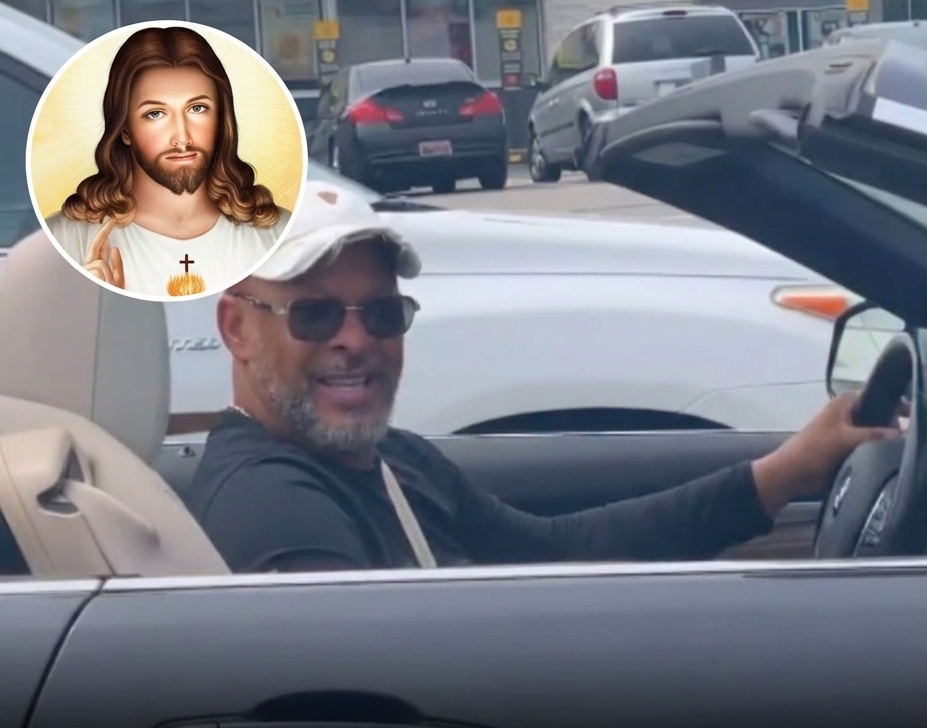
A brief video of a driver singing worship songs in gridlocked traffic has spread widely online, drawing attention not for spectacle, but for the plain, unguarded way he turned an ordinary delay into praise. The clip, filmed somewhere in a long traffic jam and shared across social platforms in recent days, shows a man alone in his vehicle, voice lifted in worship and testimony as cars sat motionless around him.
The moment struck a nerve because it felt unscripted. There was no stage, no church service, no polished production team, just a man behind the wheel and a public witness to the change he says Jesus made in his life. In a digital feed crowded with argument and distraction, a few minutes of worship in traffic cut through the noise with unusual force.
What followed was a wave of reposts, reactions, and comments from Christian viewers who saw more than a viral clip. They saw a picture of faith refusing to shrink when circumstances are inconvenient. And that matters, because the story’s appeal rests less on the jam itself than on the sense that worship did not wait for ideal conditions.
Faith In A Unlikely Place
The video’s power lies in its setting. Traffic jams are usually associated with frustration, wasted time, and a slow loss of patience. Here, though, the vehicle became a small sanctuary, and the driver’s voice carried a kind of unexpected continuity with the biblical pattern of praising God in constraining places.
Scripture is full of moments when worship rises from pressure rather than comfort. Paul and Silas sang in prison in Acts 16, while David often wrote as if he were hemmed in on every side. The traffic jam clip lands in that same emotional territory, even if the setting is modern and the story is simple.
That simplicity is part of why the video resonated so widely. It did not depend on technical skill or dramatic language. Instead, it offered a picture of ordinary discipleship in motion, with a believer making room for gratitude and testimony in the middle of a common inconvenience.
For many Christian viewers, the scene also carried a reminder that witness does not always take shape in a church program or conference arena. It can unfold in daily life, where faith is most easily tested and most convincingly displayed. In that sense, the clip felt less like a performance and more like a lived confession;
A Testimony Without A Stage
The driver’s worship included a personal testimony about how Jesus changed his life, according to the widely shared video. The details of his background were not presented in a formal interview or ministry profile, but the force of the moment came through clearly enough: gratitude, relief, and joy were all wrapped together in a public declaration of transformed living.
That combination has long been central to Christian testimony. The message is not merely that life improved, but that Christ intervened, redirected, and redefined a person’s story. In the New Testament, testimony is often less about polish and more about truth spoken plainly.
That likely explains why viewers responded so quickly. A testimony in traffic feels refreshingly unmanufactured, especially at a time when so much online faith content is carefully framed for maximum reach. The man in the car appeared to be doing something older and simpler than content creation: bearing witness.
There is also a quiet pastoral dimension to the moment. Many believers know the difference between believing in private and confessing in public. The video blurred that divide, showing a man where he was, not where he might have preferred to be, and still choosing to praise Jesus openly.
Why The Clip Spread So Fast
Social media has a way of amplifying moments that feel both surprising and relatable. This one had the advantage of being immediately legible: a driver trapped in traffic, singing worship, speaking of a changed life, and doing so with no apparent awareness that the moment would travel far beyond the car.
The online response reflected a hunger for authenticity. Christian audiences in particular often gravitate toward stories that feel raw rather than packaged, and this clip fit that pattern neatly. It appeared to offer a small but vivid answer to cynicism — faith can surface anywhere, and sometimes it surfaces best where nobody expects it.
There was also a practical appeal. Most people know what it is to sit in traffic and feel the clock pressing. The contrast between frustration and worship gave the video its lift. Instead of complaining about delay, the driver filled the gap with praise.
For churches and ministries observing the reaction, the clip served as a timely reminder that evangelistic witness is not limited to a pulpit. Everyday environments still matter. Commutes, errands, and interruptions remain places where manner, speech, and song can reveal what the heart treasures most.
The Broader Spiritual Meaning
Christian tradition has long treated ordinary setbacks as opportunities for spiritual formation. James 1 speaks of testing that produces steadfastness, while Philippians 4 urges rejoicing in the Lord even under strain. The traffic jam video sits comfortably inside that biblical logic, because it shows praise not as denial of difficulty, but as defiance of it.
That distinction is important. The driver was not pretending that traffic was pleasant. He was choosing to answer inconvenience with worship. In a culture that often treats disruptions as excuses for irritation, the clip offered a different instinct altogether.
It also highlighted how public faith can shape the emotional atmosphere around a person. A single car cannot clear a highway, but it can carry a different spirit into the middle of it. That is one reason the video felt so striking: it suggested that worship is portable.
For Christians across denominations, the moment touched a familiar truth. Faith is not only for gathered worship on Sunday mornings, as important as that is. It also travels through Monday traffic, Tuesday deadlines, and the small hidden stretches of life where character is formed and revealed.
What The Moment Says About The Church
The clip arrives at a time when many churches are thinking carefully about how faith appears in public life. Some communities emphasize liturgy and reverence, while others focus on spontaneous expression and personal testimony. This story, in its own modest way, held both together: heartfelt worship and a clear account of Jesus’ power to change a life.
It also offered a counterpoint to the idea that Christian witness must always be large to matter. The internet may have turned the traffic jam into a global stage, but the original moment was tiny. A man remained where he was and worshiped anyway. That small act became the whole story.
There is a reason such moments linger. They remind the Church that faithfulness is often measured not by visibility, but by constancy. The apostle Paul’s command to pray without ceasing feels less abstract when a driver turns a stalled road into a place of praise.
In the end, the video’s reach may fade, as viral moments often do. Yet the instinct behind it remains worth noticing: when Christ changes a life, even traffic can become a testimony, and even delay can become a doorway to worship.