
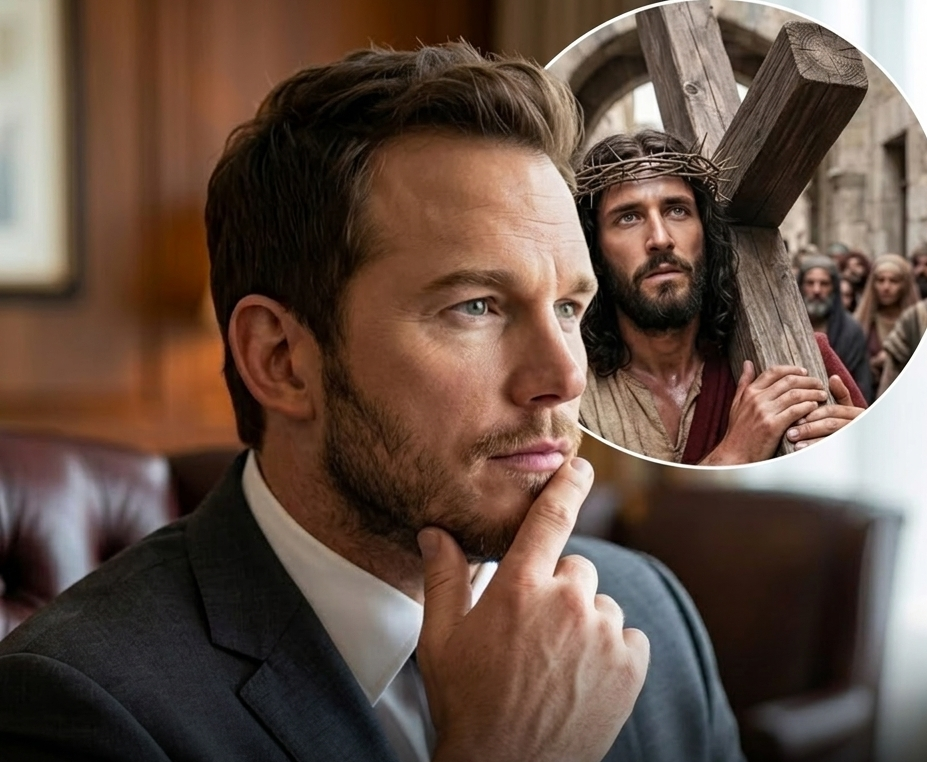
Chris Pratt has once again placed his Christian faith at the center of his public life, saying in recent interviews and on social media that his relationship with Jesus is not optional, even if it comes at a cost in Hollywood. The actor, known worldwide for Guardians of the Galaxy and Jurassic World, also listed Jesus among the things he “can’t live without,” turning a personal conviction into a public declaration.
That is no small thing in an industry where faith can become a liability as quickly as a headline. Pratt’s remarks, including his resolve to stand for Christ “even if it cost[s] me everything,” landed as another reminder that one of Hollywood’s most visible stars continues to speak about Christianity in unusually direct terms.
A Public Faith That Refuses To Stay Quiet
Pratt’s testimony has unfolded over years, but the latest comments sharpen the picture. He has identified himself as a “Follower of Jesus” rather than a celebrity who keeps belief tucked neatly into private life. His Instagram post listing essentials, with Jesus included among them, made the point in plain language: faith is not a side note.
He has also framed that commitment as something costly and worth the price. In his telling, the decision to stand openly for Christ is not about image management or branding. It is about obedience, conviction, and a belief that the Gospel matters more than professional caution.
Pratt’s public posture has made him a rare figure in mainstream entertainment. Plenty of actors mention spirituality in broad terms. Far fewer speak about Jesus with enough specificity to draw criticism, especially when the language leaves little room for ambiguity.
From Lutheran Roots To A Sharper Conversion Story
Pratt’s faith journey began in a Lutheran upbringing, but his current emphasis reflects a more personal, non-denominational commitment to Jesus. He has often described his belief as something that deepened under pressure rather than something inherited without conflict. For him, the story of faith is not merely about tradition. It is about surrender.
One of the clearest turning points came in 2012, when his son was born prematurely and faced serious medical complications. Pratt has described that season as a moment of trembling dependence on God, the kind of crisis that strips away celebrity gloss and exposes what is left underneath. The experience, he has suggested, changed the direction of his life.
He has also connected his belief in God’s providence to other moments of family survival, including the protection of his home during deadly wildfires. In each case, the pattern is the same. Crisis leads to gratitude, and gratitude leads to more public confidence that God is not distant.
Hollywood Scrutiny And The Cost Of Speaking Openly
Pratt’s faith has not been met with universal applause. His attendance at Hillsong Church drew criticism in some media coverage, with his name pulled into broader cultural debates about sexuality, inclusion, and the public image of evangelical Christianity. In response, he has made clear that he does not view Christian conviction as a license for contempt.
He has affirmed that everyone is entitled to love whom they choose without judgment from fellow humans. At the same time, he has refused to retreat from his belief in biblical truth or tone down his language about Jesus. That tension sits at the heart of his public witness: conviction without cruelty, clarity without hostility.
During the Guardians of the Galaxy Vol. 3 premiere, Pratt brushed aside backlash with a line that echoed the New Testament’s own warnings about opposition to Christ. The point was simple. Hostility to faith is not new, and it is not proof that faith has failed.
Scripture, Fame, And The Pressures Of Visibility
Pratt has repeatedly returned to Scripture when discussing fame, criticism, and the realities of life in entertainment. He has appealed to Proverbs 26:20, especially the wisdom about removing fuel from a fire, as a framework for dealing with manufactured outrage and public rumor. Silence, in his view, can sometimes be better than feeding the blaze.
That biblical instinct gives his public comments a particular texture. He does not speak like a polished faith influencer delivering canned devotionals. He speaks like a man who believes the Bible addresses the very pressure points he faces daily: pride, fear, slander, and the seduction of applause.
He has also urged people to pray, describing it as simple and good for the soul. His message at the MTV Awards carried the same basic conviction: God is real, God loves people, and fame should be handled with care. In a culture built on attention, that is a distinctly countercultural warning.
Family, Gratitude, And A Different Measure Of Success
Pratt’s marriage to Katherine Schwarzenegger Pratt has also shaped the way he speaks about faith and success. Their family life, along with shared Christian values, appears to anchor him in a world that rewards volatility. His social media presence reflects that perspective, with phrases like “God first” and gratitude presented as non-negotiables.
He has warned that fame without a strong faith foundation can crush a person. The warning feels less like celebrity wisdom and more like pastoral counsel. In a business known for image, momentum, and self-protection, he keeps returning to family, prayer, and gratitude as stabilizing practices.
When negativity rises, his stated instinct is prayer for critics and then a return to ordinary life with children and home. That rhythm fits the biblical pattern of refusing to be mastered by the opinions of others. It also echoes the apostle Paul’s insistence that the believer’s approval comes from God, not the crowd.
A Witness That Still Divides Opinion
Pratt’s latest reflections have reignited debate inside and outside the Church. Some Christians see him as a needed witness in a faith-hostile culture, a major star willing to speak of Jesus where silence would be easier. Others wish his public courage looked different, or sounded more explicitly theological.
Both reactions reveal something important. In a time when many public figures avoid Christian language altogether, Pratt’s willingness to speak about Christ has become its own kind of signal. He is not trying to disappear into the background. He is trying to remain visible without backing away.
His comments also reflect a larger cultural reality. Hollywood remains a place where people can discuss spirituality in broad, comfortable terms, but the name of Jesus still introduces a sharper edge. Pratt has chosen that edge, and he has done so in full view of an audience that may admire, question, or dismiss him.
For Christian readers, the story lands with familiar force. The New Testament never promised that public faith would be easy, only that it would matter, and Pratt’s latest words keep that tension in plain sight. In a world that rewards caution, he is still choosing confession.
And that makes his message resonate far beyond one actor, because the church has long known that the cost of following Christ can be real, but so is the joy of standing firm.