
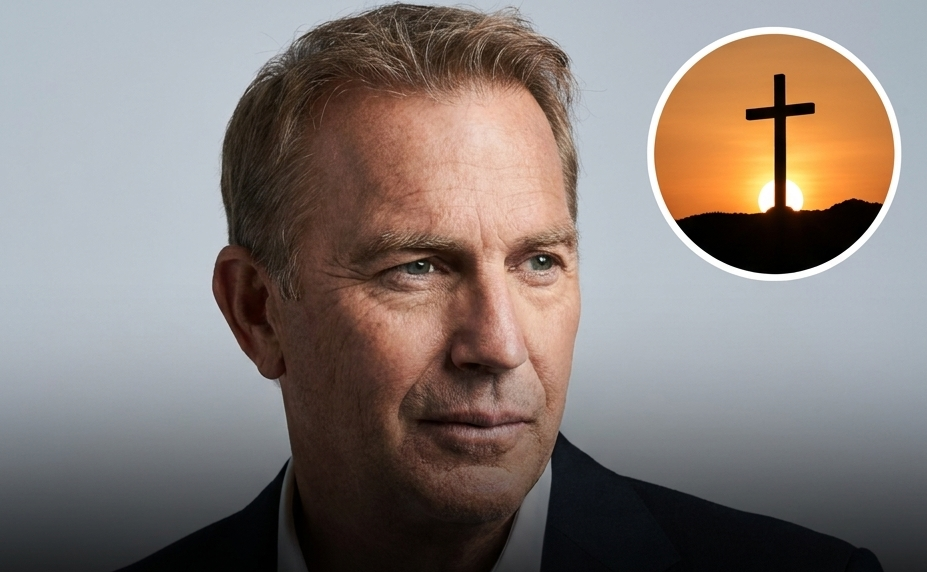
Kevin Costner is drawing fresh attention for a message that sounds almost old-fashioned in Hollywood: faith, not fame, shapes a life. The 70-year-old actor, long known for roles in films and on television, has recently reflected publicly on God, moral choices, and the way a Christian upbringing still guides his work and priorities.
That message has come into sharper focus through recent faith-centered projects tied to Christmas and the nativity story, as well as through comments about growing up in a Baptist home. In a business built on image, pressure, and constant reinvention, Costner’s emphasis on spiritual conviction stands out.
Faith Before Fame
Costner’s remarks fit a pattern that has emerged across his career. He has often framed success as something limited and fragile, while treating faith as the steadier force beneath the surface. That distinction matters in an industry where public approval can rise and fall quickly.
His view of life appears rooted less in awards or box-office numbers than in moral discernment. Rather than treating career choices as purely commercial decisions, he has described a process shaped by conscience and belief. For a major Hollywood figure to speak that way is notable, especially at a time when public language about faith can feel increasingly rare in entertainment circles.
The language of Christian endurance also runs through his reflections. One of the clearest themes has been perseverance through uncertainty, a theme that echoes Hebrews 12:1, which urges believers to run with endurance the race set before them. Costner’s own story suggests that resilience, for him, is not detached from belief but sustained by it.
A Church Foundation That Still Matters
Costner has pointed back to early acting experiences in church as formative, even simple ones. He has described being told to “stand still” while performing in that setting, an instruction that may sound ordinary but carried lasting influence. Those early moments appear to have taught him that performance can carry meaning beyond applause.
That background also places his career in a distinctly Christian frame. Many actors learn timing, presence, and delivery on a stage or set. Costner’s foundation in church gave him an additional layer: the sense that storytelling can point beyond the performer and toward something larger.
Raised in a Baptist home, he has continued to identify faith as a constant through personal and professional storms. In an industry often defined by reinvention, that kind of continuity is unusual. It also helps explain why his public comments about God have landed with such weight among Christian audiences.
Christmas, Nativity, and Public Faith
Costner’s recent work has reflected the same direction. He has focused on projects tied to Christmas and the nativity, including a Christmas special and a nativity production. Those choices suggest a deliberate return to stories that carry spiritual significance rather than merely seasonal sentiment.
One especially visible example came when he narrated the birth of Jesus Christ on national television. That moment fit naturally with his church background and with his broader interest in faith-based storytelling. It also placed the Christmas story before a wide audience at a time when the crucifixion and resurrection often receive less public attention than the cultural trappings of the season.
The nativity account remains central to Christian belief because it marks the incarnation, the moment when God entered human history in the person of Christ. For many believers, a public figure lending his voice to that story is more than a media event. It is a reminder that the old gospel narrative still speaks across generations and platforms.
Choosing Belief In A Culture Of Pressure
Costner’s comments about faith have also touched a deeper nerve. He has described belief as something chosen and sustained rather than supplied by success or social approval. That framing resonates with James 1:17, which describes every good and perfect gift as coming from above rather than from the shifting ground of human acclaim.
He has also stressed that not everything in life can be explained. That kind of honesty can sound surprising in a culture that prizes certainty and control. But it fits a Christian understanding of trust, where faith often means continuing forward without full visibility.
For many Christians watching celebrity culture, Costner’s language carries a quiet counterpoint to the dominant script of achievement. Hollywood often measures meaning in money, relevance, and visibility. His comments suggest a different scale entirely, one that weighs character more heavily than celebrity.
And that matters. When a well-known figure talks openly about belief, it can give language to ordinary Christians who are used to living out faith without public applause.
Why The Story Resonates Now
The response to Costner’s remarks reflects more than interest in a famous name. It points to a broader hunger for moral clarity in public life, especially when many people feel exhausted by spectacle and cynicism. A familiar actor speaking plainly about God and conscience can feel refreshing because it cuts against the grain.
His focus on meaningful storytelling also lands at a time when faith-based productions continue to find audiences. Churches, families, and Christian media often respond strongly to projects that present biblical themes without irony or apology. Costner’s recent choices place him inside that cultural conversation, not at its edge.
Still, the significance is not mainly about one celebrity’s public persona. It is about the values behind the persona. Costner’s reflections suggest that the deepest questions remain the same whether a person stands on a church stage, a movie set, or a global platform: what truly lasts, what shapes the soul, and what is worth building a life around.
For Christian readers, his comments may feel familiar rather than surprising. The New Testament repeatedly warns against storing up treasure that fades, and Jesus’ words in Matthew 16:26 remain stark: “For what will it profit a man if he gains the whole world and forfeits his soul?” That verse seems to sit quietly beneath the worldview Costner has described.
His career may still bring awards, attention, and major roles. But the larger story now is simpler and sturdier than celebrity. In Costner’s telling, faith remains the constant, and everything else comes after it.
Kevin Costner is drawing fresh attention for a message that sounds almost old-fashioned in Hollywood: faith, not fame, shapes a life. The 70-year-old actor, long known for roles in films and on television, has recently reflected publicly on God, moral choices, and the way a Christian upbringing still guides his work and priorities.
That message has come into sharper focus through recent faith-centered projects tied to Christmas and the nativity story, as well as through comments about growing up in a Baptist home. In a business built on image, pressure, and constant reinvention, Costner’s emphasis on spiritual conviction stands out.
Faith Before Fame
Costner’s remarks fit a pattern that has emerged across his career. He has often framed success as something limited and fragile, while treating faith as the steadier force beneath the surface. That distinction matters in an industry where public approval can rise and fall quickly.
His view of life appears rooted less in awards or box-office numbers than in moral discernment. Rather than treating career choices as purely commercial decisions, he has described a process shaped by conscience and belief. For a major Hollywood figure to speak that way is notable, especially at a time when public language about faith can feel increasingly rare in entertainment circles.
The language of Christian endurance also runs through his reflections. One of the clearest themes has been perseverance through uncertainty, a theme that echoes Hebrews 12:1, which urges believers to run with endurance the race set before them. Costner’s own story suggests that resilience, for him, is not detached from belief but sustained by it.
A Church Foundation That Still Matters
Costner has pointed back to early acting experiences in church as formative, even simple ones. He has described being told to “stand still” while performing in that setting, an instruction that may sound ordinary but carried lasting influence. Those early moments appear to have taught him that performance can carry meaning beyond applause.
That background also places his career in a distinctly Christian frame. Many actors learn timing, presence, and delivery on a stage or set. Costner’s foundation in church gave him an additional layer: the sense that storytelling can point beyond the performer and toward something larger.
Raised in a Baptist home, he has continued to identify faith as a constant through personal and professional storms. In an industry often defined by reinvention, that kind of continuity is unusual. It also helps explain why his public comments about God have landed with such weight among Christian audiences.
Christmas, Nativity, and Public Faith
Costner’s recent work has reflected the same direction. He has focused on projects tied to Christmas and the nativity, including a Christmas special and a nativity production. Those choices suggest a deliberate return to stories that carry spiritual significance rather than merely seasonal sentiment.
One especially visible example came when he narrated the birth of Jesus Christ on national television. That moment fit naturally with his church background and with his broader interest in faith-based storytelling. It also placed the Christmas story before a wide audience at a time when the crucifixion and resurrection often receive less public attention than the cultural trappings of the season.
The nativity account remains central to Christian belief because it marks the incarnation, the moment when God entered human history in the person of Christ. For many believers, a public figure lending his voice to that story is more than a media event. It is a reminder that the old gospel narrative still speaks across generations and platforms.
Choosing Belief In A Culture Of Pressure
Costner’s comments about faith have also touched a deeper nerve. He has described belief as something chosen and sustained rather than supplied by success or social approval. That framing resonates with James 1:17, which describes every good and perfect gift as coming from above rather than from the shifting ground of human acclaim.
He has also stressed that not everything in life can be explained. That kind of honesty can sound surprising in a culture that prizes certainty and control. But it fits a Christian understanding of trust, where faith often means continuing forward without full visibility.
For many Christians watching celebrity culture, Costner’s language carries a quiet counterpoint to the dominant script of achievement. Hollywood often measures meaning in money, relevance, and visibility. His comments suggest a different scale entirely, one that weighs character more heavily than celebrity.
And that matters. When a well-known figure talks openly about belief, it can give language to ordinary Christians who are used to living out faith without public applause.
Why The Story Resonates Now
The response to Costner’s remarks reflects more than interest in a famous name. It points to a broader hunger for moral clarity in public life, especially when many people feel exhausted by spectacle and cynicism. A familiar actor speaking plainly about God and conscience can feel refreshing because it cuts against the grain.
His focus on meaningful storytelling also lands at a time when faith-based productions continue to find audiences. Churches, families, and Christian media often respond strongly to projects that present biblical themes without irony or apology. Costner’s recent choices place him inside that cultural conversation, not at its edge.
Still, the significance is not mainly about one celebrity’s public persona. It is about the values behind the persona. Costner’s reflections suggest that the deepest questions remain the same whether a person stands on a church stage, a movie set, or a global platform: what truly lasts, what shapes the soul, and what is worth building a life around.
For Christian readers, his comments may feel familiar rather than surprising. The New Testament repeatedly warns against storing up treasure that fades, and Jesus’ words in Matthew 16:26 remain stark: “For what will it profit a man if he gains the whole world and forfeits his soul?” That verse seems to sit quietly beneath the worldview Costner has described.
His career may still bring awards, attention, and major roles. But the larger story now is simpler and sturdier than celebrity. In Costner’s telling, faith remains the constant, and everything else comes after it.