
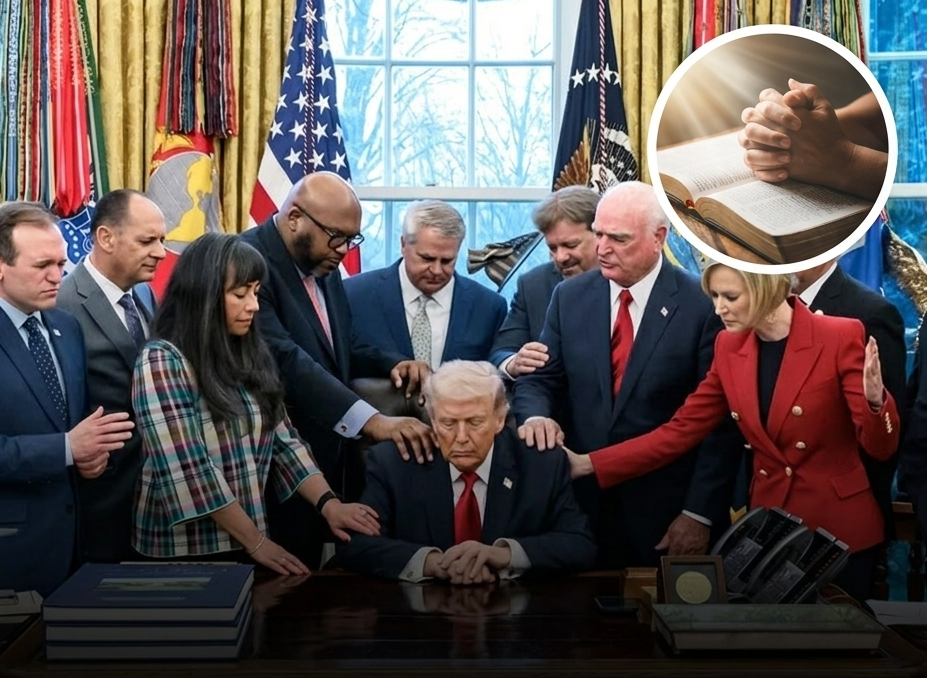
The White House marked the 75th National Day of Prayer on Thursday, May 7, 2026, with a call for Americans to unite in worship, thanksgiving, and rededication as the nation moves toward its 250th anniversary. The observance unfolded alongside major prayer gatherings at the U.S. Capitol and dozens of other venues, turning the day into one of the largest public expressions of faith in the country this year.
At the center of the White House message was a familiar but forceful Christian conviction: prayer still matters in public life, in private homes, and in the life of a nation. The administration framed America’s story as bound together by a “golden thread of devotion to God,” language that placed the day within both a spiritual and historical arc. That matters because the National Day of Prayer has never been only a ceremonial line on the calendar. For many believers, it has become a yearly reminder that national renewal begins not in politics alone, but in repentance and prayer.
Prayer, Heritage, And A National Milestone
This year’s observance carried extra weight because it coincided with the approach of America’s semiquincentennial in 2026. The White House tied the National Day of Prayer to that milestone, presenting prayer as part of the country’s preparation for its 250th year. The emphasis was clear: if America hopes to mark the anniversary with gratitude and purpose, it must first remember its dependence on God.
The official theme for the day, “Glorify God Among the Nations — Seeking Him in All Generations,” came from 1 Chronicles 16:24 in the ESV: “Declare his glory among the nations, his marvelous works among all the peoples!” That biblical anchor shaped events across the country, from grand gatherings in Washington to small-town prayer meetings in churches, schools, and civic spaces. Across all 50 states, U.S. territories, and Washington, D.C., tens of thousands of observances drew participants from across denominational lines.
The White House also used the day to encourage practical prayer rhythms. A dedicated page, “America Prays,” outlined ways for Christians and others to organize weekly prayers around public leaders, families, communities, and cultural renewal. The materials pointed to prayer challenges, prayer lists, and digital platforms that would help people build what organizers described as a holy habit. In other words, the day was not presented as a one-time gesture, but as a doorway into sustained spiritual discipline.
Capitol Prayer And Public Witness
While the White House carried the symbolic message, much of the day’s visible activity centered on the U.S. Capitol. In Statuary Hall, House Speaker Mike Johnson, HUD Secretary Scott Turner, chaplains, and other leaders joined in prayer and reflection. The setting itself carried a certain irony and significance. In the same building where legislation is debated and power is negotiated, the day invited leaders to bow before a higher authority.
The National Day of Prayer Task Force, which has long coordinated many of the countrywide observances, described this year’s theme as rooted in the thanksgiving prayer of King David in 1 Chronicles 16. That connection gave the event a biblical shape that crossed both Testaments: remembering God’s deeds, thanking Him for His faithfulness, and asking Him to guide the next generation. For many churches, this kind of framing fits naturally with the long Christian tradition of civic prayer.
The national livestream from Statuary Hall, scheduled for the evening, extended the event beyond Washington and into homes, churches, and prayer groups across the country. Military traditions also played a role through events such as the U.S. Coast Guard’s National Day of Prayer breakfast, adding another layer to the day’s message about service, duty, and dependence on God. And that matters in a season when public trust often feels thin. Prayer offered a different way to think about leadership: not as self-sufficiency, but as stewardship under God.
Faith Leaders, Local Churches, And A Broad National Reach
The sheer scale of the observance revealed how deeply the National Day of Prayer has spread through American religious life. States such as Florida, California, Texas, New York, and Tennessee each hosted more than 100 events. Every county in New York held some form of observance, while smaller communities such as Wintersville, Ohio, and Penn Yan, New York, joined in through local pastors, youth leaders, and lay believers.
That breadth is one reason the day continues to resonate across denominational lines. Congregations in evangelical, Catholic, mainline Protestant, Orthodox, and Pentecostal traditions often approach the day differently, but the common ground remains sturdy. Christians across those traditions share a conviction that prayer is not symbolic filler. It is an act of obedience, a plea for mercy, and a confession that nations, like individuals, need God.
Organizers encouraged believers to treat the day as more than a public event. The emphasis on names, themes, and weekly concerns pointed toward a prayer life shaped by concrete needs: elected officials, families under strain, communities facing moral confusion, and churches seeking renewed courage. That pattern echoes Paul’s instruction in 1 Timothy 2:1-2, where prayers and thanksgivings are urged “for all people, for kings and all who are in high positions.”
Looking Toward May 17
The prayer focus on May 7 also served as a bridge to the National Jubilee of Prayer, Praise, and Thanksgiving scheduled for May 17 on the National Mall. That gathering is expected to draw participants from every state for a public rededication tied to the nation’s 250th anniversary year. The event was announced earlier this year during the National Prayer Breakfast, and it has become part of the larger spiritual framing around the semiquincentennial.
The language surrounding the May 17 gathering has been unmistakably celebratory and devotional. The aim is not simply to commemorate national history, but to respond to it with gratitude and humility. In that sense, the coming gathering reflects a pattern familiar throughout Scripture: remembrance leading to worship, and worship leading to renewal.
The White House message also echoes remarks from last year and from 2025, when calls for stronger religious commitment were tied to hopes for national healing. Whether one reads that through a civic lens or a spiritual one, the underlying assumption is the same. A nation’s future depends not only on policy and prosperity, but on its moral and spiritual foundations.
A Long Tradition With New Urgency
The National Day of Prayer has occupied a place in American public life since Congress established it in 1952, later fixing it by law on the first Thursday in May. Presidents have issued annual proclamations for decades, and the observance has drawn support from leaders across party lines. Its endurance suggests that, even in a divided culture, public prayer still speaks to a deep and enduring longing.
For Christians, the day also carries a quieter challenge. It is easy to celebrate public religion and still neglect personal repentance, family worship, and faithful service. But the biblical picture of prayer is never merely ceremonial. It is relational, sustained, and often costly. It turns hearts upward while also sending believers outward into the world with humility and hope.
As the country moves toward its 250th anniversary, this year’s National Day of Prayer placed that tension in plain view: a nation remembering its past, a White House calling for devotion, and churches across the land answering with prayer that asks God to do what politics never can.