
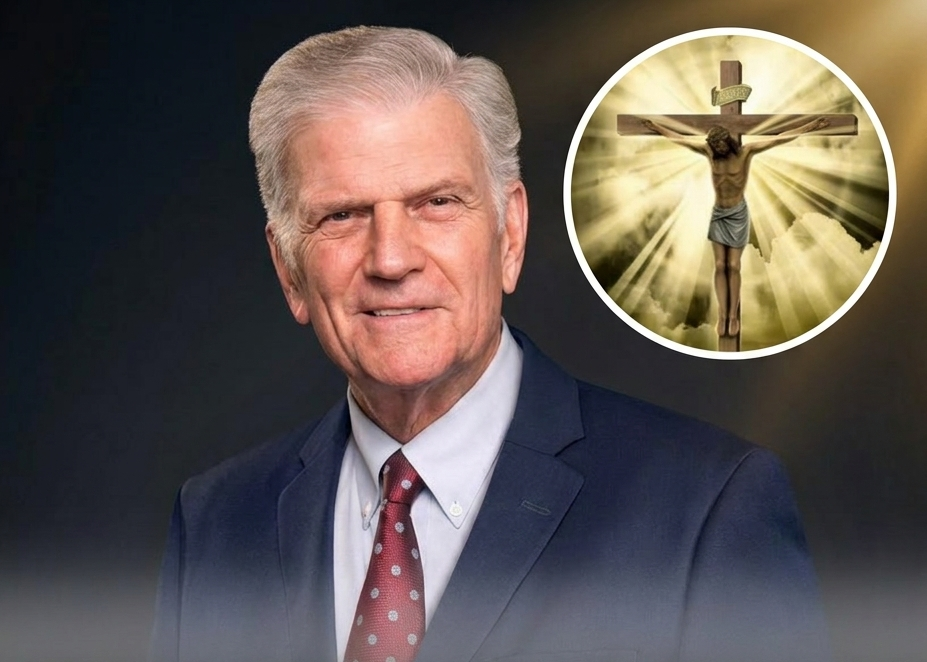
Franklin Graham has again pressed a message many American churches know well but struggle to live out: the nation’s true hope rests in Jesus Christ, not in politics. In recent statements and appearances, the evangelist urged Christians to resist treating parties, presidents, or policy wins as saviors, insisting that only the gospel can bring lasting peace, healing, and restoration.
The message lands at a moment when public life feels especially divided, and Graham has framed that division in deeply spiritual terms. He has tied the moral condition of the country to its relationship with God, calling believers to pray, repent, and keep their eyes fixed on Christ rather than on the shifting tides of political power.
A Familiar Warning From A Prominent Evangelical Voice
Graham’s remarks fit a pattern that has marked much of his public ministry. The president and chief executive of Samaritan’s Purse and the Billy Graham Evangelistic Association has long argued that political systems can help shape culture, but they cannot redeem people. That distinction sits at the center of his latest emphasis.
In recent preaching and broadcasts, Graham has returned again and again to the same point: civic engagement matters, but it has limits. Christians may vote, speak, and participate in public life, yet their deepest allegiance must remain with Jesus Christ. That message has pushed back against the temptation, common in every generation, to assign messianic expectations to human leaders.
Graham has presented that warning in unusually blunt terms. He has rejected confidence in either major party as a final answer for the nation and pointed instead to God as the only lasting hope. In a political climate where many Americans have become emotionally invested in partisan identity, that kind of language stands out.
And that matters. In the Christian tradition, political involvement has always been treated as real but secondary. The apostle Paul urged prayer for rulers in 1 Timothy 2:1-2, while Scripture also insists that ultimate trust belongs not to princes but to the Lord. Psalm 146:3-5 says, “Put not your trust in princes, in a son of man, in whom there is no salvation.”
Why Graham’s Message Resonates Now
Graham’s renewed urgency comes during a season when Americans continue to wrestle with polarization, distrust, and national fatigue. Many churches have felt that strain directly. Congregations that once managed to avoid political tension now find themselves navigating it in small groups, pulpits, family discussions, and even ministry partnerships.
Against that backdrop, Graham’s insistence that politics cannot save has found a receptive audience among Christians weary of constant outrage. His appeal is not for withdrawal from public life. It is for humility, discernment, and a clearer sense of what can and cannot be accomplished through elections or legislation.
He has also linked national renewal to repentance, a theme that runs through much of historic evangelical preaching. The call is not merely to vote faithfully or advocate for just policies, but to examine personal and collective sin. In Graham’s framing, a nation cannot be healed at the deepest level without spiritual awakening.
That message echoes passages such as 2 Chronicles 7:14, which promises that God will hear, forgive, and heal when his people humble themselves and turn from wicked ways. For many Christians, that text remains a familiar shorthand for revival. Graham’s words tap into that same theological current, one that sees moral decline not only as a civic problem but as a spiritual one.
The Gospel And The Public Square
Graham has not rejected political engagement. He has urged believers to vote and to participate in the civic process while holding partisan identities loosely. His point has been that public responsibility should flow from discipleship, not replace it. For churches, that creates a demanding balance.
Across denominations, that balance has often proven difficult. Some Christians lean heavily into activism and policy, while others retreat from public life almost entirely. Graham’s message sits between those poles. It calls believers to remain present in society, but to do so under the lordship of Christ and with Scripture as the final authority.
The theological logic is straightforward. Human governments can restrain evil, preserve order, and promote the common good, but they cannot change the heart. The New Testament places that weight on the gospel, which proclaims salvation through Christ alone and new life by the Spirit. Isaiah 9:6 describes the coming Messiah as the one upon whose shoulders government rests, a striking reminder that even political authority is ultimately subordinate to him.
That is one reason Graham’s message often lands beyond evangelical circles as well. It speaks to a broader cultural fatigue with the idea that any election cycle will finally settle the nation’s deeper anxieties. The disappointments of politics have made many people more open to the claim that hope must come from somewhere higher.
Churches, Media, And The Wider Christian Response
Christian leaders and media voices have largely received Graham’s emphasis as timely. Many have echoed the same conviction: politics may influence laws and institutions, but only the gospel can transform the human heart. That is a distinction rooted in basic Christian teaching, yet it becomes especially visible when national life feels unstable.
Graham has also remained a highly visible figure because his ministry extends beyond sermons and commentary. His international evangelistic work and humanitarian outreach have kept him in front of global audiences, reinforcing the impression that his political remarks come from a broader spiritual concern rather than a single election cycle. He has often tied public events to evangelistic urgency, not just cultural critique.
His father, Billy Graham, became known for calling Americans to repentance while maintaining a measure of distance from partisan identification. Franklin Graham has inherited much of that instinct, though often in a more combative public environment. The family name still carries weight among evangelicals who value revival preaching and a simple gospel-centered message.
That inheritance is part of why his words continue to draw attention. When Graham says the nation’s hope is in God rather than party politics, he is not offering a new theory. He is repeating an old evangelical conviction in a new and noisy moment.
Faith Under Pressure In A Divided Nation
The broader question behind Graham’s comments is not just political, but pastoral. What happens when Christians begin to locate their security in outcomes that can change overnight? Graham’s answer is clear: disappointment follows, because only Jesus remains constant in a world marked by instability.
That conviction also shapes how many churches preach and pray in election seasons. Some pastors urge congregations to avoid idolizing candidates. Others emphasize the moral consequences of policy. Graham’s recent messages land in that same space, urging believers to remain engaged without surrendering their confidence to the political process.
For ordinary churchgoers, that can be bracing. It calls for a kind of spiritual discipline that is easier to admire than to practice. Holding convictions strongly while refusing to place ultimate hope in earthly systems is a difficult line to walk. Yet that tension mirrors the Christian claim that believers are citizens of heaven first, even as they live faithfully on earth.
Romans 13, Philippians 3:20, and 1 Peter all help frame that tension. Christians are not called to apathy. They are called to order their loves correctly. Graham’s current emphasis is built on that same idea: political engagement has a place, but Christ must remain central.
In a nation often tempted to confuse victory with salvation, Graham’s reminder lands with unusual force, and it leaves the church with an old but urgent task — to pray, to repent, and to keep pointing weary people back to the only kingdom that cannot be shaken.