
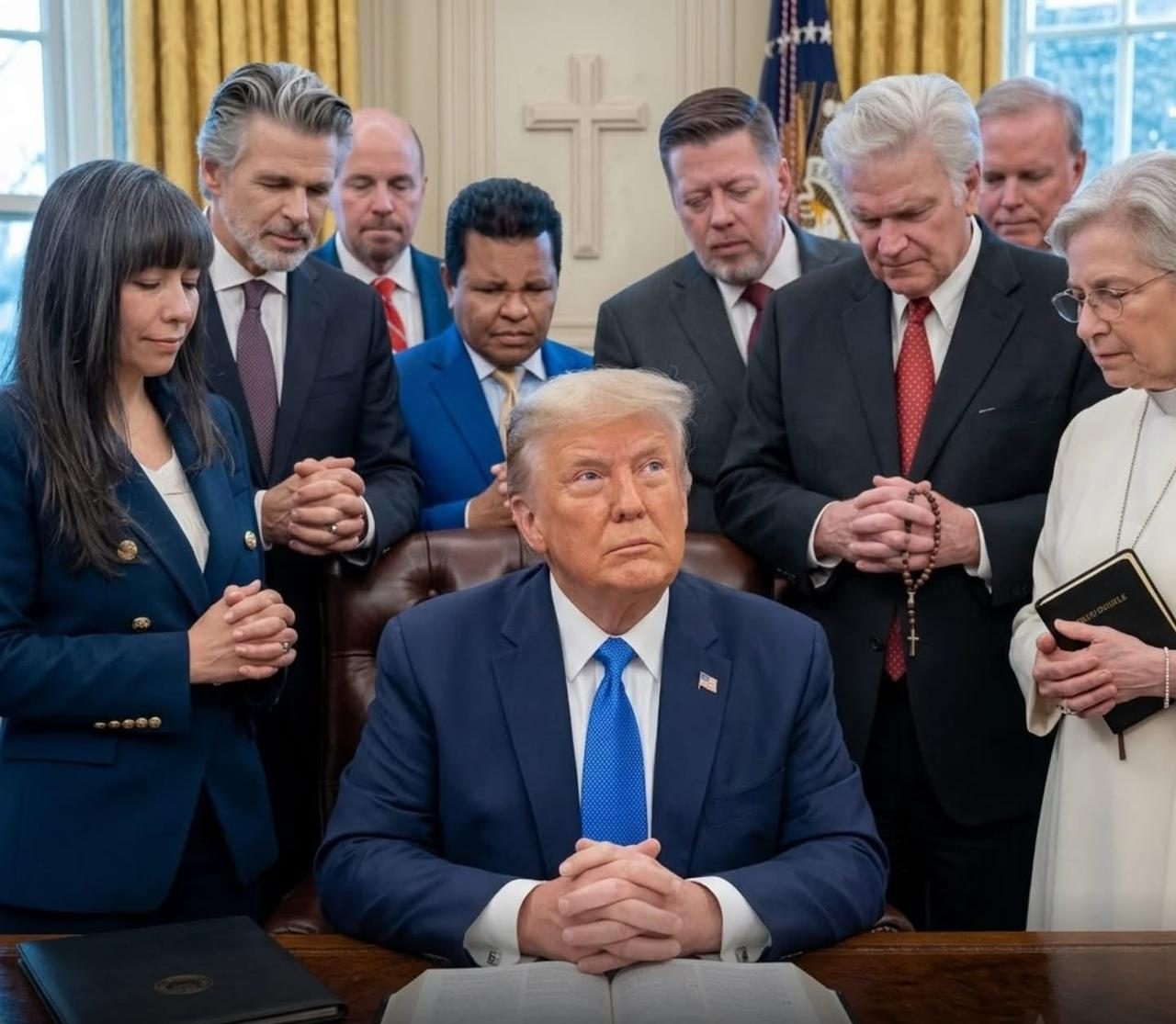
President Donald Trump is urging Americans to set aside one hour each week for prayer as part of a new initiative called America Prays, a campaign framed around national unity, healing, and spiritual renewal ahead of the country’s 250th anniversary. The effort, presented through White House materials and tied to his remarks at the 2026 National Prayer Breakfast, aims to rally one million Americans into weekly prayer groups.
The initiative places prayer at the center of a broader call for rededication to God and to the nation’s founding ideals. It arrives at a time when many churches continue to navigate deep cultural strain, political division, and concern over the spiritual direction of public life. That makes the new campaign more than symbolic. It is being presented as a sustained effort to mobilize believers.
America Prays invites participants to gather in homes, churches, and other settings for one hour each week to pray for the nation and its people. The White House has described the goal as a national prayer movement running alongside preparations for the 250th anniversary of the United States. The emphasis on prayer, rather than policy alone, gives the campaign a distinctly religious frame.
Trump’s public comments at prayer-focused events have repeatedly linked prayer with faith, hope, healing, and public unity. The current effort continues in that direction, casting prayer as a response to the fractures many Americans see around them. In Christian terms, that message draws on a familiar conviction: renewal begins not with slogans, but with repentance, humility, and dependence on God.
Prayer As National Preparation
The America Prays initiative is being positioned as part of a larger season of preparation for the nation’s semiquincentennial. Official materials describe it as a rededication of the United States as one nation under God. That language is both patriotic and devotional, blending civic memory with spiritual aspiration.
Christian-oriented coverage has framed the initiative as part of a coordinated campaign for the next year, not merely a one-day observance. The strongest emphasis has been on sustained prayer, with churches and religious communities encouraged to take part. In practical terms, that means the story is not only about what happens at a podium, but what may happen in sanctuaries, prayer rooms, and living rooms across the country.
The May 17 gathering on the National Mall has also been described in Christian commentary circles as a National Jubilee of Prayer, Praise, and Thanksgiving. That event focused on worship, reflection, and communal prayer, giving the new initiative a public face and a sense of momentum. It also provided a visible reminder that prayer remains central to much of the nation’s Christian life.
The theological language surrounding the campaign matters. Jubilee language evokes release, restoration, and return, themes rooted deeply in Scripture. Leviticus 25 describes the jubilee year as a time when liberty is proclaimed, debts are released, and land is restored. For many believers, that biblical backdrop gives the current moment more gravity than a simple patriotic observance.
The White House Push For Weekly Prayer
The White House has said the goal is to enlist one million Americans in weekly prayer for national renewal. The structure is simple: one hour, one week at a time. That simplicity is part of the appeal. It is easy to understand, easy to share, and difficult to dismiss as merely ceremonial.
The campaign also reflects a broader public pattern in Trump’s religious messaging. At prayer breakfasts and related events, he has consistently highlighted spiritual language around healing and national renewal. This time, the message is packaged more deliberately, with a concrete invitation for ordinary Americans to participate rather than simply observe.
For churches, the initiative could have a practical effect well beyond Washington. Congregations that already gather for prayer meetings, Bible studies, and intercession efforts may see the campaign as a prompt to widen participation. Smaller fellowships may treat it as an occasion to call families back into regular prayer. Larger ones may use it to coordinate with broader community efforts.
And that matters. In a country where many people feel exhausted by conflict, a national prayer emphasis offers a different kind of public language. It calls attention to dependence, not performance; to pleading, not posturing. Christian readers will recognize that as close to the New Testament’s rhythm of wisdom in James 1:5, where God gives wisdom generously to those who ask.
A Season Of Division And Hope
The campaign lands in a moment when division remains a dominant feature of American life. Political polarization, cultural conflict, economic anxiety, and distrust in institutions continue to shape the national conversation. Many believers also express concern about family breakdown, moral confusion, and declining spiritual attention in public life.
Against that backdrop, a weekly prayer initiative feels intentionally countercultural. It suggests that healing the public square cannot be reduced to legislation, messaging, or activism alone. It also reflects a long Christian instinct: before people can agree on direction, they must first seek God together.
The language of healing has particular resonance in Christian communities. Scripture repeatedly links healing with confession, prayer, and restored relationship. Second Chronicles 7:14 remains one of the most frequently invoked passages in moments like this: “If my people who are called by my name humble themselves, and pray and seek my face… then I will hear from heaven and will forgive their sin and heal their land.”
That verse has often been used in public American religion, sometimes too casually. But in this setting, it fits the moment because the campaign itself is built on humility and repeated prayer. It is an appeal to spiritual discipline, not just ceremonial faith.
Churches And Leaders Watch Closely
Church leaders from across denominational lines are likely to watch the effort closely, in part because it touches a familiar tension in American Christianity. Many believers welcome public attention to prayer and welcome any invitation that points the nation back toward God. Others remain cautious whenever faith language enters the political arena, fearing that prayer can become a symbol rather than a sincere practice.
That tension is not new. American Christians have long debated how closely faith should align with civic power, especially when public officials speak in religious terms. Yet the current initiative does not sit comfortably in a purely political category. Its structure, weekly and decentralized, pushes it toward grassroots religious life rather than a one-time stage event.
For Catholic, Protestant, Evangelical, and Orthodox believers alike, the call to prayer is familiar territory. The differences emerge in emphasis. Some traditions will stress national repentance. Others will focus on intercession for leaders, families, and the vulnerable. Still others may frame the initiative as an opportunity for worship, not only petition.
The common ground is clear enough. Christians across denominations understand prayer as essential, not decorative. Philippians 4:6 offers the plain instruction: “Do not be anxious about anything, but in everything by prayer and supplication with thanksgiving let your requests be made known to God.”
What Comes Next For America Prays
The coming months will show whether America Prays becomes a genuine prayer movement or remains tied mainly to official events and religiously themed announcements. Success, by the White House’s own framing, depends on participation. One million people praying weekly would represent a significant mobilization of faith communities across the country.
If that participation takes root, the effects could reach beyond political symbolism. Prayer groups often lead to deeper church involvement, renewed small-group life, and new local relationships among believers. They can also draw attention to service, repentance, and reconciliation in ways that speeches alone rarely do.
There is also a broader witness at stake. In a culture that often treats religion as private sentiment or a campaign accessory, a sustained call to prayer insists that faith still belongs in the nation’s most important conversations. Whether Americans receive that call as personal invitation or public gesture, it has already reopened a familiar Christian question: what might change if the country truly turned its attention toward God?
The answer will unfold not in a single ceremony, but in the quiet discipline of weekly prayer, where hope is renewed one hour at a time.