
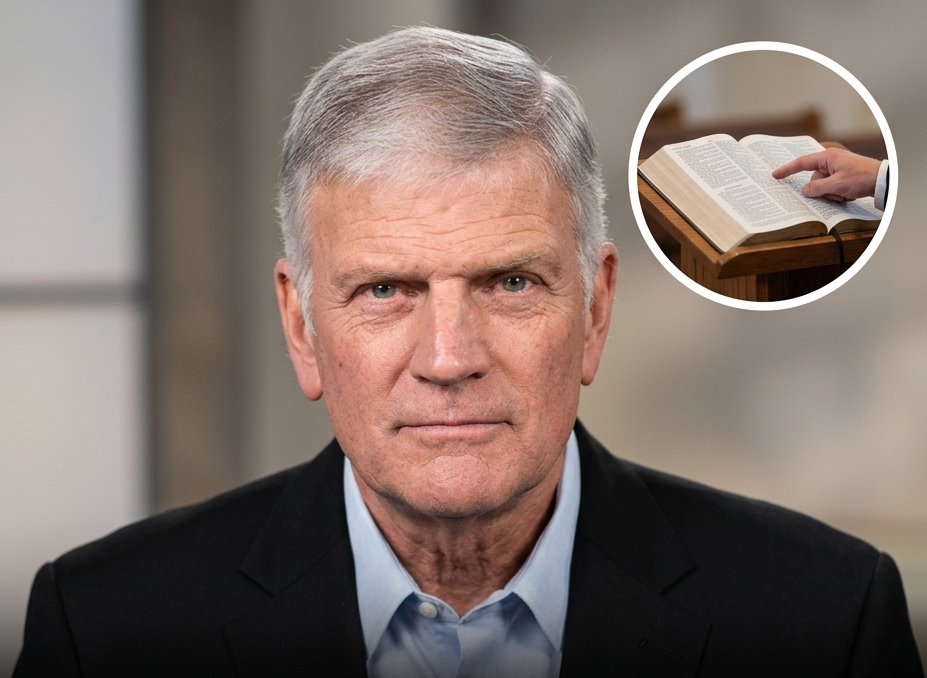
Franklin Graham has once again called Americans to stop and pray, urging a nationwide turn to repentance at noon Wednesday as he framed the moment as a spiritual emergency for the country. The evangelist said the United States has drifted from God and needs forgiveness, prayer, and a return to biblical obedience.
The appeal landed amid a bleak national mood. Graham linked the call to the country’s wider turmoil, pressing believers to pray for leaders, for peace on the streets, and for a fresh awakening of conscience. His message was simple and striking: America’s deepest problems are not merely political or social, but spiritual.
A Call Framed As A National Turning Point
Graham’s latest warning fits a pattern that has marked much of his public ministry in recent years. He has repeatedly argued that the nation’s unrest, moral confusion, and deepening division point to a larger break between the country and God. In his view, the answer begins with repentance rather than reinvention.
That emphasis has made his appeals familiar to many churchgoers, even if they remain controversial in broader public debate. Graham has consistently tied national wellbeing to spiritual renewal, insisting that a people cannot expect peace while ignoring God’s commands. The latest call sharpened that message by naming a specific hour for collective prayer.
The noon prayer moment gave the exhortation a concrete shape. Instead of a broad religious slogan, it became an invitation to pause, confess sin, and seek divine mercy together. The timing mattered because it turned a general concern into an act meant to be shared across churches, homes, workplaces, and prayer groups.
Repentance As Both Personal And Public
At the center of Graham’s message is a conviction common across many Christian traditions: repentance is never only about private devotion. It also carries moral weight in public life, where the habits of a people can either reflect humility before God or resistance to Him.
That theme echoes the prophetic language of Scripture. In 2 Chronicles 7:14, God’s people are called to humble themselves, pray, seek His face, and turn from wicked ways. Graham’s appeal draws from that same spiritual logic, presenting prayer as the starting point for renewal rather than a ceremonial gesture.
He has also stressed that the need begins with individuals. National repentance, in this view, is only credible if personal repentance comes first. That distinction matters for churches across denominational lines, since it keeps the focus on ordinary believers examining their own lives, not merely criticizing the culture around them.
The message has found a receptive audience among Christians who believe the nation’s troubles run deeper than policy disputes. Many see rising anger, social fragmentation, and moral confusion as signs that prayer is no longer optional. For them, Graham’s call sounds less like a campaign message and more like a warning bell.
Why This Moment Resonates With Churches
Graham’s appeal arrives at a time when many congregations are already wrestling with fatigue, political suspicion, and a sense that public life has grown harsher. Pastors and lay leaders across traditions have spent years urging prayer for leaders, civic peace, and spiritual renewal. His new call places those concerns back at the center.
The idea of praying for government leaders also carries clear biblical roots. First Timothy 2:1-2 urges prayers for all people, including those in authority, so that believers may lead “a peaceful and quiet life, godly and dignified in every way.” Graham’s request for prayer at a tense moment in the nation follows that pattern closely.
And that matters. In Christian thought, prayer is not a last resort after institutions fail. It is an act of dependence that recognizes God’s rule over every sphere of life, including public life. Graham’s message reflects that conviction in direct, urgent language.
His repeated warnings about sin, secularism, and moral decline also speak to a broader tension felt across the church. Some Christians focus on cultural renewal through policy, while others stress evangelism, discipleship, and prayer. Graham’s approach blends those concerns by insisting that moral change begins with spiritual surrender.
A Familiar Message In A Fraught Season
The latest attention around Graham’s remarks also points to how persistent his theme has become. This is not a one-time reaction to a headline or a single crisis. It is part of a continuing public message that America’s hope lies in turning back to God before judgment hardens into irretrievable decline.
That message travels well in evangelical circles, where calls to repentance often serve as both warning and invitation. It warns against self-reliance and moral compromise, but it also invites mercy. In that sense, Graham’s tone remains consistent with a long Christian tradition that holds conviction and hope together.
Many believers hear in his words a reminder that prayer still has public meaning. Even in a crowded media environment, the act of repentance can reshape how Christians view politics, civic responsibility, and neighborly peace. It asks for humility before God before demanding solutions from human systems.
Graham’s reference to millions of people repenting and seeking God’s face underscores the scale of the vision. He is not calling for isolated spiritual exercise but for a collective turning. The power of that idea lies in its simplicity: if many hearts change, the country’s atmosphere may change with them.
What The Appeal Signals For The Church
The renewed focus on repentance also highlights how national concerns continue to shape Christian public witness. Churches are frequently caught between spiritual care and civic pressure, and Graham’s message pushes hard toward the spiritual side of that equation. It reminds believers that prayer for a nation is never separate from holiness in daily life.
For some Christians, the call will sound urgent and necessary. For others, it may feel like a familiar refrain in a divided era. But even among those differences, the core claim remains unmistakable: a country that forgets God cannot expect lasting stability, and a church that forgets prayer loses its way.
Graham’s latest appeal places that conviction back in the public square, asking Americans to stop, repent, and seek God while there is still time.