
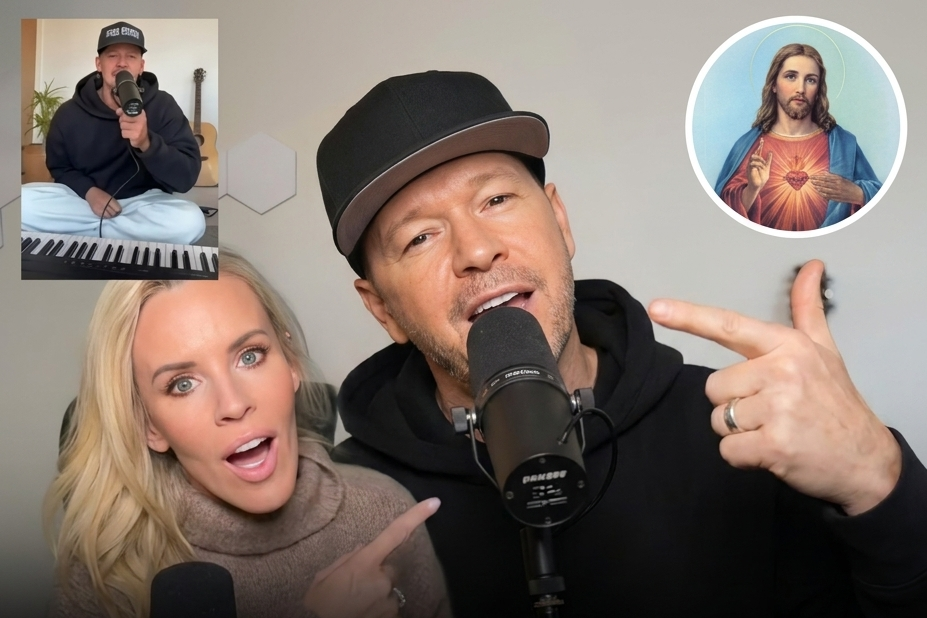
Donnie Wahlberg went viral this week after joining Forrest Frank’s “Jesus Is Alive” open verse challenge with a rap about Christ’s return, giving the Christian music moment an unexpected boost from one of pop culture’s most familiar faces. The New Kids on the Block singer and Blue Bloods actor appeared in the challenge after encouragement from his wife, Jenny McCarthy.
The result landed fast. Wahlberg’s clip spread across social media, drawing fresh attention not only to his performance but also to Frank’s growing challenge around an unreleased song built around resurrection hope. In a digital landscape often crowded with noise, the video cut through because it merged celebrity reach, testimony, and a straightforward confession about Jesus.
From A Social Media Prompt To A Wide Reach
Frank, a rising Christian artist known for high-energy, faith-centered songs and strong TikTok traction, launched the challenge on Instagram by inviting others to record a verse over his new track, Jesus Is Alive. The open-format idea quickly turned into a collaborative stream of contributions from indie musicians, Christian hip-hop performers, and other creators eager to add their voices.
That kind of participatory format has become one of the most effective tools in modern Christian music promotion. It turns a song into a shared statement, not just a finished product. And that matters, especially when the message centers on the resurrection of Jesus, one of the central claims of historic Christianity.
As entries multiplied, names from the Christian music and hip-hop world helped build momentum. Marcus Rogers, Vic Lucas, Anike, and Yung Kriss all appeared among the participants, giving the challenge a broad mix of styles and audiences. The format also helped Frank’s already-strong online presence reach beyond his usual circle.
Then Wahlberg entered the conversation, and the challenge crossed into a different lane. His participation added a layer of mainstream visibility that few Christian artists can access on their own. It also placed an unmistakably public Christian statement in front of millions who may not follow faith-based music closely.
Wahlberg’s Verse And Public Faith
Wahlberg’s video showed him delivering a spirited rap over the track while wearing sunglasses and leaning into the moment with clear confidence. Jenny McCarthy appeared to help push him into the challenge, and the playful tone of the post contrasted with the seriousness of the message underneath it: Jesus is alive.
The clip drew attention not just because Wahlberg is a celebrity, but because it fit into a larger and more personal story. He has spoken recently about a spiritual turning point after wrestling with emptiness despite years of success in entertainment. That public shift has made his involvement in a Christian music challenge feel less like a novelty and more like part of a real testimony.
In a recent podcast conversation, Wahlberg described reaching a place where outward success no longer satisfied him and turning toward Christ in response. He later framed his relationship with Jesus as the most important part of his life. That kind of language carries weight in an entertainment culture that usually rewards self-promotion over humility.
For Christian readers, the moment is easy to recognize. It echoes the pattern of Scripture, where people with public prominence are not excluded from repentance and renewal. Romans 10 presents confession of Jesus as Lord not as a private accessory, but as a matter of life itself. Wahlberg’s viral verse placed that confession into a setting built for speed, visibility, and reach.
Why The Clip Connected So Quickly
Part of the reason Wahlberg’s entry resonated is simple: it felt unexpected without feeling forced. The challenge itself encouraged creativity, and his appearance gave the trend a recognizable face outside the usual Christian media lanes. Millions of viewers tend to pause when a familiar name appears in a faith-driven setting, especially one that does not sound staged.
The response also reflects a broader cultural moment. Public expressions of Christian faith among entertainers, athletes, and online personalities have become more visible in recent years, even as some remain cautious about how they will be received. Wahlberg’s verse joined that stream, showing a willingness to attach his name to a message about Jesus rather than keep faith in the background.
For Frank, the viral attention strengthens a strategy that has defined his ministry and music: build songs that travel well online without losing their devotional center. His sound blends polished production, joyful energy, and clear Christian language, which has helped him reach listeners who may not typically seek out contemporary Christian music. The open verse challenge fits that model almost perfectly.
It is also a reminder that social media can still function as a genuine testimony space. Platforms often reward performance, but they also allow brief, direct declarations to move quickly. A short rap about Jesus’ resurrection can now travel farther in a day than a local church announcement might travel in a year.
The Challenge’s Growing Christian Footprint
The “Jesus Is Alive” challenge has become more than a promotional tactic. It has started to resemble a digital gathering place, with creators layering their own styles over a common theological center. The repeated phrase signals resurrection, hope, and the living presence of Christ in a way that remains easy to share and hard to ignore.
That combination helps explain why so many artists have joined in. The format gives room for excellence, personal style, and witness all at once. In a music world where genres often keep their distance from one another, the challenge has created a rare bridge between Christian hip-hop, worship-inflected pop, and mainstream celebrity culture.
For churches watching from the outside, the moment offers a useful glimpse into how younger audiences often encounter spiritual ideas now. They do not always meet them first in a sanctuary. Sometimes they meet them in a clip, a challenge, or a remix that begins with a beat and ends with a confession of Christ.
That does not replace preaching, discipleship, or the gathered life of the church. But it does show that the gospel still finds unexpected openings. Acts 17 presents a Paul who engages the public square with clarity and courage, and modern digital culture has created a new kind of square — one where faith can travel faster than ever.
A Viral Moment With Lasting Resonance
No official follow-up from Frank or Wahlberg had surfaced by the latest reports, and the full shape of the challenge’s next stage remains open. A compilation, a release, or another viral wave could easily follow. For now, the momentum itself has already become part of the story.
The deeper significance may not be the celebrity surprise, though that helped the clip spread. It may be the simple fact that a mainstream entertainer publicly tied his voice to a song centered on Jesus’ resurrection and did so in a way that felt personal, not performative. In a culture that often treats faith as private or ornamental, that is no small thing.
Wahlberg’s rap, Frank’s challenge, and the flood of responses around them have combined into a rare public moment where Christian confession traveled far beyond church walls, and for a brief stretch, the gospel rode the same wave as the viral internet.