
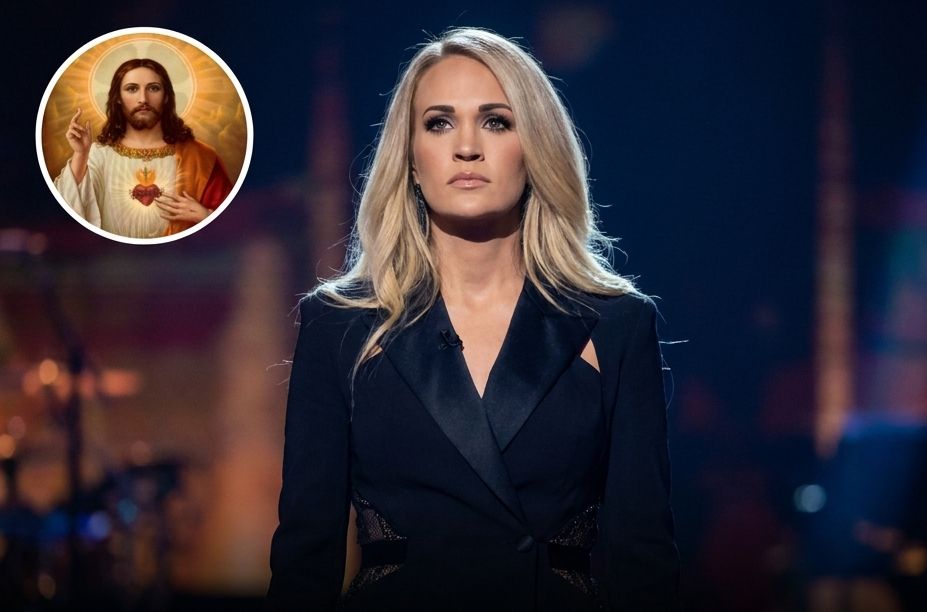
Carrie Underwood used a national television stage this week to deliver a blunt challenge to the entertainment world, telling aspiring artists during American Idol’s second annual Songs of Faith episode that they do not have to compromise their convictions to succeed. The Grammy-winning singer, who serves as a judge on the ABC competition series, tied the message to her own journey as a Christian in country music.
The Oklahoma native spoke during Easter week, when the program leaned heavily into worship, testimony, and gospel music. Her remarks landed in the middle of a broadcast that felt less like a talent show and more like a church service carried over the airwaves. That was no small thing for a mainstream show with millions watching.
A Primetime Stage For Faith
The episode featured performances centered on Christian faith, including a rendition of “How Great Thou Art” with Underwood and former contestants Filo, Canaan, and Kolbi. Judges Lionel Richie and Luke Bryan opened the night with “Jesus Is Love,” setting a tone that quickly moved beyond the usual competition format.
Contestants also sang faith-based songs, and the broadcast included moments of prayer and worship. Viral child pastor Luke Tillman also appeared, adding to the episode’s unusually devotional atmosphere. For a show built on performance, the evening carried a rare sense of reverence.
Underwood has long stood out in country music for making her Christian faith visible rather than private. Songs such as “Jesus, Take the Wheel” helped define her early image, and her 2021 gospel project My Savior made that identity even clearer. In an industry where belief is often softened for broader appeal, she has kept the center in place.
“You Don’t Have To Sell Your Soul”
Following the broadcast, Underwood delivered the night’s sharpest line in clear, plain language: aspiring artists do not have to sell their soul to make it in entertainment. She added that believers must stand strong in faith and remember who opened the door in the first place.
The message carried the weight of someone who has lived it. Since winning American Idol in 2005, Underwood has built a massive career in mainstream country music while remaining openly Christian. Her success has made her one of the most visible examples of faith and fame coexisting without a complete surrender to industry pressure.
Her comments echoed a biblical refrain many Christians know well: faithfulness matters more than image, and obedience is worth more than applause. The words of Jesus in Mark 8:36 remain uncomfortably relevant to a culture that still rewards ambition at almost any cost. “For what does it profit a man to gain the whole world and forfeit his soul?”
A Different Kind Of American Idol Night
The Songs of Faith episode marked the second year American Idol has devoted an installment to Christian music and worship. The format gave the contestants room to sing material that reflected personal belief rather than only vocal range and stage presence. For a show with a secular reputation, the shift was unmistakable.
That shift mattered most because it took place in the public square. Entertainment audiences are accustomed to polished performances, dramatic pacing, and emotional storylines. They are not often invited into explicit worship, much less during a prime-time competition. This episode did both without apology.
Underwood’s own performance of “How Great Thou Art” stood as the night’s emotional centerpiece. The hymn has long held a special place in Christian worship across denominations, and its presence on a large television platform gave the evening a deeper resonance. The song’s praise-filled theology fit the moment with uncommon force.
Faith In The Spotlight
The episode also drew attention because the season’s finalists have all been identified publicly as Christians. That detail added another layer to the night’s theme, suggesting that the faith conversation on American Idol was not a one-off gesture but part of a broader pattern this season.
For many churchgoers, the sight of openly believing contestants on a marquee entertainment stage offered a welcome contrast to the usual assumption that serious faith and public success cannot coexist. The New Testament’s call to be “in the world” without being shaped by it still lands with force in places like Hollywood and Nashville.
Underwood’s career has often illustrated that tension. She has been able to operate inside the commercial machinery of country music while speaking and singing from a Christian worldview. Her latest comments sharpened that example into an explicit warning against spiritual compromise.
And that matters, especially for younger artists trying to navigate an industry that can reward reinvention more than conviction. The Christian imagination has always had room for excellence, but never at the cost of worshipping success itself. Underwood’s message drew that line with unusual clarity.
A Familiar Witness, Newly Amplified
Underwood is not a newcomer to public expressions of faith. Over the years, she has spoken through her music, her performances, and her choices about where to place the center of her life. That consistency has made her a familiar figure to Christian audiences far beyond country radio.
Her role on American Idol now gives that witness an even wider platform. As a judge mentoring new performers, she occupies a space where artistic advice and moral example naturally meet. In a culture that often treats belief as a private accessory, her presence keeps faith visibly tied to vocation.
The timing also fit the calendar. Easter week brought with it a heightened Christian focus, and the episode used that moment to foreground resurrection hope, worship, and testimony. For many viewers, it likely felt like a brief window where network television and church language occupied the same stage.
Christian observers often note that public affirmation of faith in entertainment can be fragile and fleeting. Still, the sight of a major star telling emerging artists to resist soul-selling language carried its own significance. It suggested that integrity remains possible, even in industries built on pressure and image.
Underwood’s words also reflected a broader biblical pattern. Scripture repeatedly places spiritual loyalty above worldly advancement, whether in the stories of Daniel, Esther, or the early church. The details change across generations, but the question remains the same: what is worth surrendering, and what never should be?
For now, the moment belongs to a live broadcast, a hymn, and a message that cut through the noise of entertainment with surprising plainness. In an industry that rarely stops to speak about the soul, Carrie Underwood did exactly that, and the silence afterward seemed to say the words had landed.