
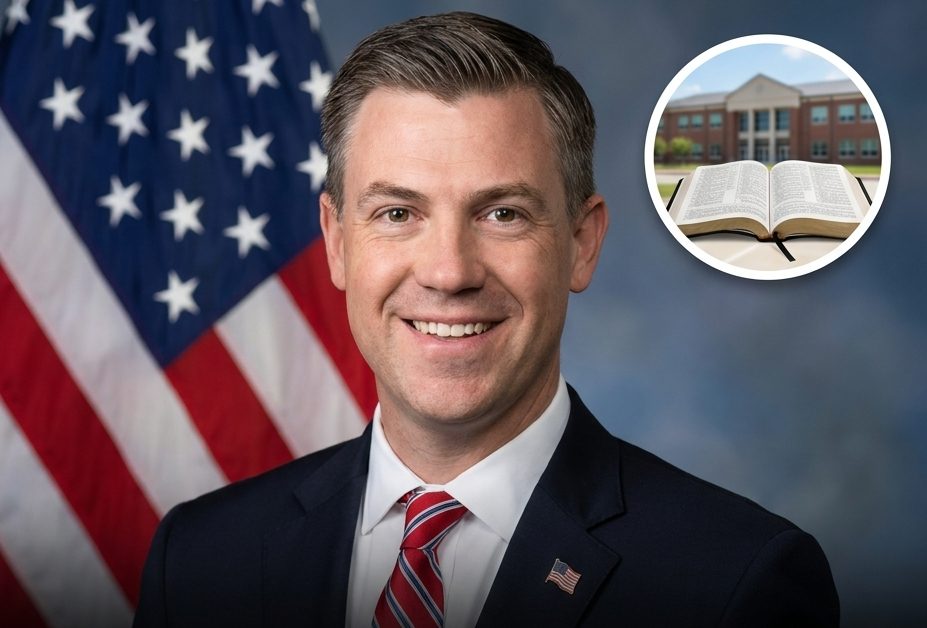
Sen. Jim Banks of Indiana has reintroduced legislation aimed at keeping schools from steering young children into sexuality or gender-identity messaging without parental involvement, putting a fresh spotlight on one of the most emotionally charged debates in American education. The measures, unveiled in Washington this week, focus on K–12 schools, parental consent, and state child-welfare policy.
The most immediate proposal, the Empower Parents to Protect Their Kids Act, would bar schools from concealing or encouraging a student’s adoption of an identity that does not match biological sex. It would also require parental consent before any school accommodation is made to affirm that identity, and it would give parents the ability to sue school districts that withhold such information.
Parenthood, Schools, And The New Front Line
Banks has cast the bill as a straightforward parental-rights measure, arguing that schools should not push or manage sensitive sexuality issues behind closed doors. The legislation, introduced in the Senate with Sen. Tom Cotton and paired with Rep. Mary Miller in the House, lands at a moment when many families are already worried about school influence over children’s emotional and moral development.
For Christian parents, the issue reaches beyond politics. It touches on a long-held conviction that parents bear primary responsibility for the formation of their children, a view rooted in passages such as Deuteronomy 6 and Ephesians 6:4. That theological instinct has helped fuel strong support among many churches and family-policy groups, especially those concerned about classroom content that appears to sidestep parents.
The bill focuses on K–12 settings, where disputes over gender identity have often centered on names, pronouns, restrooms, sports participation, and communication between school staff and families. By placing parental notice at the center of the policy, Banks is drawing a hard line between school authority and family authority. That is no small thing.
The GUARD Act Raises The Stakes
Banks has also brought back the GUARD Act, a broader proposal that would link federal child-welfare funding to state policy. Under that measure, states could lose funding under the Child Abuse Prevention and Treatment Act if they discriminate against parents who refuse medical, psychological, or social transition interventions for minors whose gender identity differs from biological sex.
That proposal reaches beyond schools and into the child-welfare system, where state agencies can become involved in private family disputes. Its backers see the bill as a shield against government pressure on families that decline transition-related interventions for children. Its critics see it as a direct challenge to existing anti-discrimination approaches and youth-care policies in several states.
The funding connection makes the bill especially significant. CAPTA dollars support child abuse prevention efforts across the country, so any change in eligibility could have a wide ripple effect. In practical terms, the GUARD Act would give Congress a sharper tool to influence how states handle family decisions around minors and gender-related services.
Why The Issue Keeps Returning
The new proposals arrive inside a larger national fight over what schools may discuss with children and when parents must be informed. Across the country, school districts have faced growing scrutiny over policies involving gender identity, student privacy, and staff communication with families. Some states have moved to require parental notification, while others have defended confidentiality in the name of student safety and privacy.
Church leaders have found themselves pulled into that conflict as families turn to pastors for guidance. Many evangelical, Catholic, and other Christian communities have stressed the importance of parental oversight, while also urging compassion toward children experiencing confusion, anxiety, or distress. The pastoral tension is real: affirming a child’s dignity without surrendering biblical convictions about sex and human identity is no simple task.
At the same time, the debate has become a test case for how public institutions understand childhood itself. Banks’ legislation assumes that children should not be introduced to sexuality messaging in the classroom at a young age and that such conversations belong first to parents and families. Supporters say that view protects children from premature ideology. Critics argue it risks excluding young people who feel isolated at school.
What Supporters And Critics See At Stake
Supporters of the bills have framed them as common-sense guardrails for schools and state agencies. Family-policy organizations and other conservative groups have rallied around that view, portraying the measures as necessary corrections to a system that too easily places adults between children and their parents.
For many Christians, especially those in churches teaching a traditional view of sex and marriage, the central concern is not simply parental notification but moral formation. They argue that schools should teach basic respect and kindness without normalizing confusion about identity among young children. In that sense, the legislation mirrors a broader cultural instinct: children are not miniature adults, and their deepest questions deserve slow, careful, family-shaped guidance.
Critics, however, are likely to focus on the practical effects. They worry that mandatory parental disclosure could put some students at risk in homes where gender identity is met with hostility. They also contend that school personnel should have flexibility to respond to students with sensitivity, especially when family circumstances are unstable.
Those concerns help explain why the fight has remained so heated. Both sides claim to be protecting children. The disagreement lies in what protection actually requires, and who should define it.
A Legislative Debate With Moral Weight
Banks’ new push reflects a broader conservative strategy in Congress, where lawmakers are increasingly using federal policy to challenge gender-identity practices in schools and child welfare systems. By placing parental rights at the center of both bills, Banks is working to translate a cultural argument into statutory language.
That move matters because legislation often does more than resolve a dispute. It teaches a society what it values. If these bills gain traction, they could reshape the boundary between school privacy policies and parental authority, while also affecting how states handle transition-related interventions for minors.
For Christian readers, the moment invites a familiar but difficult reflection. Scripture repeatedly treats children as entrusted gifts, not independent projects of the state. Psalm 127:3 calls children “a heritage from the LORD,” and that truth still carries political weight when lawmakers debate who may guide a child’s understanding of identity, sex, and family.
The bills remain proposals, not settled law, but their reintroduction ensures the debate will keep pressing into classrooms, state agencies, and church conversations alike. And for families trying to raise children with clarity and grace, the stakes feel deeply personal and far from abstract.
As Congress revisits these questions, the coming fight will likely reveal just how far public institutions are willing to go in defining childhood apart from parents, and how strongly faith communities will resist that shift.