
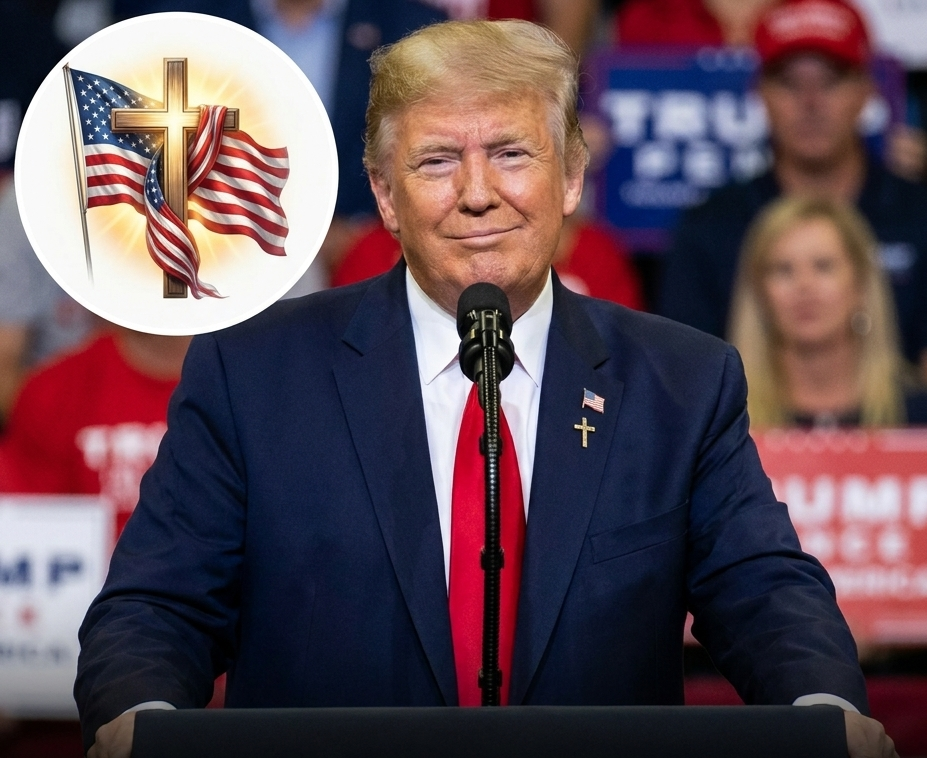
President Donald Trump marked Easter with a faith-focused message that placed the resurrection of Jesus Christ at the center of America’s story, saying The love of Christ has unfailingly guided our nation through calm waters and dark storms.
The statement, issued with First Lady Melania Trump, drew immediate attention online and renewed debate over the public role of Christianity in American civic life.
The message framed Easter not only as a Christian holy day, but as a national reminder of redemption, sacrifice, and hope. It also linked Christ’s resurrection to what Trump described as a broader revival of faith in the United States, where he said church attendance is growing and religion is regaining strength after years of decline.
Christ’s Resurrection at the Center
In the Easter proclamation, Trump described Jesus’ life, death, and resurrection as the defining facts of Christian belief. He said Christ showed true humility
in His earthly ministry and true love
in His death on the cross, then defeated death in the resurrection.
The statement said Easter reveals the victory of God’s love over evil and death, offering the promise of redemption and the hope of eternal life for all who believe in Him as Lord and Savior.
Trump also quoted John 3:16, a verse long central to evangelical preaching and broader Christian teaching: For God so loved the world that He gave His only son, for whoever believes in Him should not perish, but have eternal life.
For many Christians, especially those in evangelical, Catholic, Orthodox, and mainline Protestant traditions, the resurrection is the foundation of the faith rather than a seasonal theme. The president’s statement echoed that core doctrine in explicitly theological language, which is unusual in modern presidential messaging but familiar in Trump’s holiday remarks to faith audiences.
A National Message With Religious Language
Trump tied the Easter message to the nation’s founding and long history, saying the United States was shaped by Christians who fought for liberty and by believers who carried faith into public life. He said America’s strength depends on religion and on acknowledgment of God, arguing, To be a great nation you must have religion, and you must have God.
That language places his remarks within a long American tradition of presidents invoking Providence and biblical values during times of celebration or crisis. Yet the statement went further than generic civil religion, speaking directly of Christ’s lordship, redemptive death, and resurrection hope in distinctly Christian terms.
Trump said the nation is experiencing what he called an extraordinary resurrection of faith and religion in America,
adding that church pews are fuller, younger and more faithful than they have at any time in many, many years.
He also claimed religion is growing for the first time in decades, though broad surveys have shown a more complex religious landscape, with some signs of stability among younger adults and continuing decline in some institutional measures.
Religious observers say Trump’s message reflects the political significance of faith outreach in a country where Christians remain the largest religious group, but where public confidence in institutions has weakened. His Easter statement sought to speak to believers directly while also presenting Christianity as part of the nation’s public identity.
Social Media Reaction and Fast-Moving Debate
The message spread quickly across X, Instagram, and TikTok, where clips and quotes from the statement circulated widely within hours. Supporters praised the Easter remarks as bold and affirming in a culture they believe has grown hostile to Christian belief.
Critics, meanwhile, argued that Trump’s blending of presidential authority, religious language, and national identity was politically loaded. Some objected to the implication that America’s destiny can be measured through a specifically Christian lens, while others questioned whether the remarks aligned too closely with a partisan agenda.
The online reaction underscores how political and religious speech now moves almost instantly through social media, where statements by national leaders are read in both theological and strategic terms. For pastors and churchgoers, that often creates tension: the desire to welcome public references to Christ, while remaining cautious about political co-option of the faith.
Holy Week and the White House Faith Agenda
The Easter statement followed Trump’s Good Friday message from the Resolute Desk, where he described the resurrection as the most glorious miracle in all of time
and joined Christians around the world in observing Holy Week. That address placed the crucifixion and resurrection at the heart of the Christian calendar and echoed themes in the Easter proclamation.
The White House has also promoted a broader faith agenda during Trump’s second term. Officials have highlighted the creation of a White House Faith Office, the first in the West Wing dedicated to advancing faith-based initiatives, and a task force aimed at identifying anti-Christian bias in federal policy and enforcement.
Administration allies say those steps are meant to protect religious freedom for people of all faiths, while giving special attention to Christians who believe they have faced increasing pressure in public life. Critics counter that some of the policy language appears to elevate Christianity in ways they see as politically selective.
Trump has also signed or backed measures his allies describe as protections for conscience rights, including support for healthcare workers opposed to abortion and efforts to roll back regulations seen as conflicting with religious liberty rulings from the Supreme Court. The administration has also pointed to pardons for some Christians and pro-life activists as evidence of that approach.
Religious Liberty, Families, and Foreign Policy
Beyond symbolic messaging, the administration has tied faith policy to family and economic initiatives. Supporters say the Working Families Tax Cuts Act, along with expanded child tax credits, childcare support, paid family leave provisions, and “Trump Accounts,” is intended to help Christian and other faith-based families raise children in more secure households.
On the international front, the White House has pointed to aid for persecuted Christians in Syria, visa restrictions for foreign actors accused of violating religious freedom, and action against “debanking” of believers over their views. Those steps resonate strongly among evangelical and Catholic advocates who have long pressed Washington to defend religious minorities abroad.
Trump’s religious messaging has also included reference to what he views as spiritual renewal beyond Easter. In prior remarks, including an Epiphany message, he spoke of the glorious manifestation of Jesus Christ as the Redeemer of mankind
and described a new era of peace
shaped by resurgent faith.
That pattern has helped make Trump one of the most prominent political figures in the United States to speak so openly about Christianity. To supporters, the language marks a welcome break from public minimalism about religion. To opponents, it raises questions about the boundary between faith and political identity in a pluralistic nation.
A Divisive Yet Widely Noted Public Witness
Trump’s Easter statement also touched a deeper nerve for many Christians who see the holiday as more than a cultural observance. The proclamation’s emphasis on redemption, eternal life, and Christ’s victory over death echoed the language of historic creeds and sermons preached for centuries across denominational lines.
At the same time, the political setting gave the message an unmistakable public edge. The mix of theology, patriotism, and presidency has made Trump’s religious rhetoric among the most widely discussed aspects of his public profile, especially among evangelicals who helped fuel his electoral coalition.
Whether viewed as a sincere confession of faith, a presidential appeal to religious voters, or both, the Easter message placed Christianity directly in the national conversation. For many churches, it was a reminder that the resurrection remains the central claim of the faith and, as Trump put it, the source of hope when evil and wickedness appear to rise.
As U.S. believers continue to debate the meaning of public Christianity, Trump’s Easter remarks ensured that the message of the empty tomb would remain at the center of a very modern political and cultural moment.