
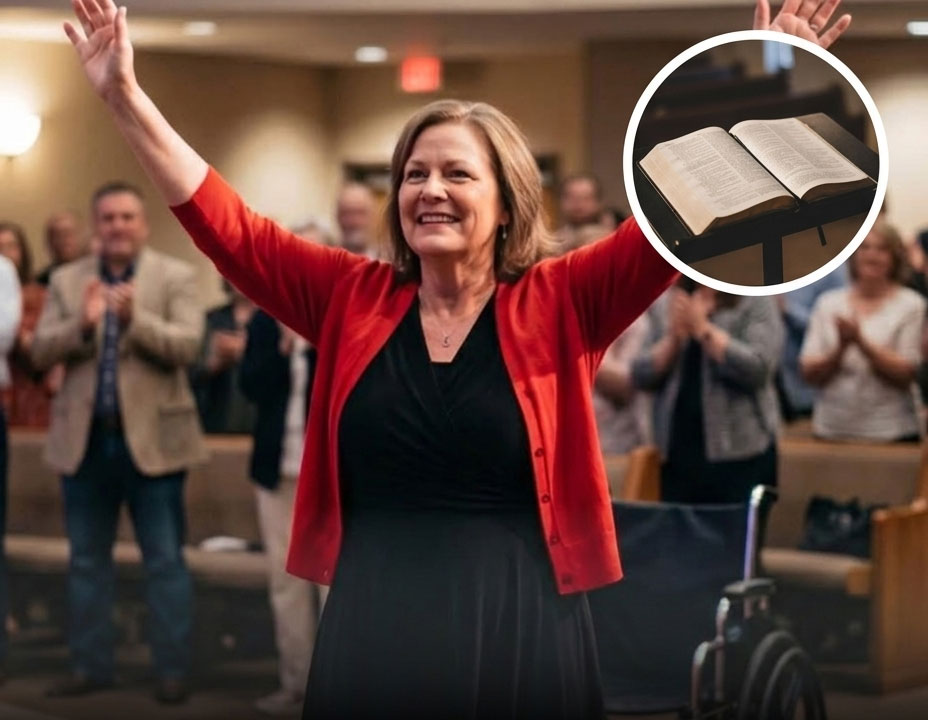
The year was 1987. Delia Knox was a vibrant young woman with a voice that could touch the heavens. As a rising gospel singer, her life was a whirlwind of music, ministry, and family. But on a cold Christmas Day in Toronto, the melody suddenly stopped. While traveling with her sister and brother-in-law after a joyous church service, their vehicle was struck with life-altering force by a drunk driver.
The impact was catastrophic. While her relatives survived with minor injuries, Delia was left with a broken body and a devastating diagnosis: permanent paralysis from the waist down. Doctors were blunt—the nerve damage was too severe. For the next twenty-two years, the woman who used to dance while she sang would be confined to a wheelchair. It was a sentence that would have broken most people, but for Delia, it was simply the opening act of a much larger story.
Two Decades of “Plopped, Dropped, and Flopped”
For over twenty years, Delia Knox lived a life of incredible contrast. By day, she was a powerhouse of faith, marrying Bishop Levy Knox and continuing her music career. She refused to let the wheelchair stop her ministry, often being carried onto stages or singing from her seat with a passion that brought audiences to their feet. Yet, behind the scenes, there was the grueling reality of “the healing circuit.”
Delia often joked that she had been “plopped, dropped, flopped, and flipped” more times than she could count. In nearly every city she visited, well-meaning believers would pray for her, pull her to the front of the room, or try to lift her out of her chair. Each time, her legs remained heavy and unresponsive. Over time, she developed a thick skin. She found peace in her situation, deciding that if she was to spend the rest of her life in a chair, she would do it with grace. She stopped looking for the miracle and started focusing on the message.
The Night the Atmosphere Shifted in Alabama
Fast forward to August 27, 2010. Delia and her husband were attending a revival meeting in Mobile, Alabama. The guest speaker was British evangelist Nathan Morris. Delia wasn’t there looking for a miracle; in fact, she later admitted she didn’t even realize it was a healing service. Had she known, she might have stayed home to avoid the emotional exhaustion of another “failed” prayer attempt.
But the atmosphere that night was different. As the music swelled and the congregation entered a deep state of worship, Delia felt something she hadn’t felt in decades. It wasn’t a physical sensation at first, but a spiritual one. She wasn’t focused on herself; she was focused on a sick child in the room, praying for their healing. It was in this moment of selflessness that she heard a distinct, quiet command in her spirit: “Get up.”
The Moment the World Held Its Breath
What happened next was captured on a grainy video that would eventually go viral, racking up millions of views. Nathan Morris approached Delia, not knowing her history or the two decades of medical records that said she was a lost cause. He simply took her hands. Delia, trembling with a mixture of fear and sudden, inexplicable hope, began to slide to the edge of her seat.
The room went silent as she gripped the evangelist’s arms. With a sudden surge of strength that defied every law of biology, Delia Knox stood. Her legs, which had withered from twenty-two years of disuse, held her weight. The first few steps were shaky, like a toddler learning to walk for the first time. But within minutes, the shakiness turned into a stride. The woman who hadn’t felt her feet since the 1980s was walking across the stage, her face twisted in a mask of beautiful, tearful shock.
Doctors Called It Impossible, She Called It Grace
The medical community is often skeptical of such events, usually attributing them to adrenaline or misdiagnosis. However, Delia’s case was well-documented over two decades. There was no medical explanation for how atrophied muscles and severed neural pathways could suddenly function with such precision. This wasn’t just a “mind over matter” moment; it was a total physical restoration.
Delia didn’t just walk that night; she stayed walking. In the weeks and months that followed, her strength only grew. She returned to her home in Buffalo, New York, and walked into her church unaided, leaving the congregation in a state of holy pandemonium. She began to do the things she had missed for half her life—simple things like standing at the kitchen sink or walking through a grocery store. She even began wearing high heels again, a small but significant symbol of her total transformation.
Why This Miracle Still Stuns the World Today
The story of Delia Knox continues to resonate because it taps into a universal human longing for restoration. In a world of “fake news” and skepticism, her story offers a glimpse of something raw and undeniable. It reminds us that there are forces at work that we cannot always explain with a spreadsheet or a microscope.
Delia’s life today is a whirlwind of activity. She continues to sing, but now she does it standing up, often pacing the stage as she shares her story. She doesn’t preach about a “magic” God who gives everyone everything they want; instead, she speaks about the importance of holding onto hope during the twenty-two years of silence. Her miracle wasn’t just about her legs; it was about the resilience of the human spirit and the power of a faith that refuses to quit, even when the seat is bolted to the floor.
The Legacy of the Woman Who Rose
Today, Delia Knox serves as a living, breathing testament to the “impossible.” Her journey from the tragedy of 1987 to the triumph of 2010 serves as a beacon for anyone facing their own “permanent” disability—be it physical, emotional, or spiritual. She stands as proof that the end of a medical report isn’t necessarily the end of the story.
As she travels the globe, Delia often looks back at her old wheelchair, which now sits as a relic of a past life. She doesn’t look at it with bitterness, but as a reminder of the long road she traveled. Her story isn’t just a news headline; it’s a masterclass in patience, a celebration of the miraculous, and a reminder to everyone listening: sometimes, the most incredible things happen just when you’ve stopped looking for them.