
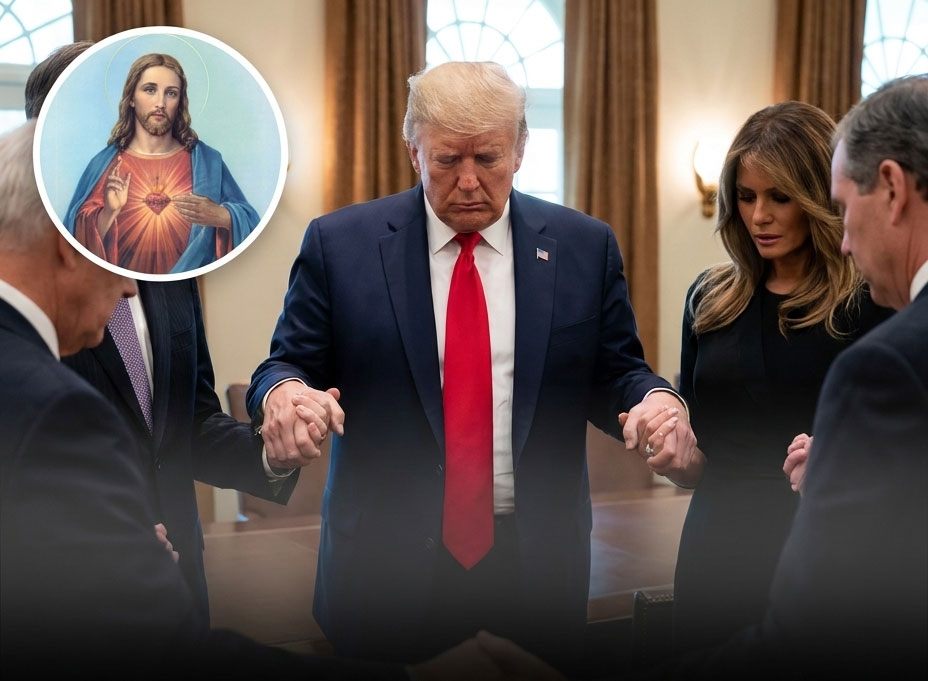
In a political landscape often defined by biting critiques and policy debates, a powerful new theme has emerged from the campaign trail of Donald Trump that is catching even his most seasoned critics off guard. It isn’t just about economics or border security anymore; it is about a deep, resonant appeal to the spiritual foundation of the American people. During a recent series of high-energy addresses, Trump delivered a message that has since gone viral across every social media platform: “With faith in God, we will not fail.”
This isn’t just a catchy slogan or a footnote in a stump speech. For many supporters, it represents a fundamental shift in the American dialogue. Trump is leaning into a narrative that suggests the challenges facing the United States—from inflation to international tension—cannot be solved by human hands alone. By invoking a divine partnership, he is tapping into a core American identity that stretches back to the Founding Fathers, and the response from the crowd has been nothing short of electric.
Why This Message Is Spreading Like Wildfire
You might wonder why a political figure known for his “Art of the Deal” business acumen is suddenly focusing so heavily on the pews. The answer lies in the current mood of the country. Many Americans feel a sense of uncertainty about the future, a feeling that the world is spinning slightly out of control. When Trump declares that failure is impossible through faith, he isn’t just making a political promise; he is offering a psychological and spiritual anchor.
This bold declaration acts as a “reset button” for his base. It moves the conversation away from the “he-said-she-said” of Washington politics and places it onto a plane of higher purpose. For the millions of voters who identify as people of faith, hearing a leader speak so unapologetically about the power of God provides a sense of validation that they feel has been missing from the national stage for decades. It is a message of resilience that suggests that no matter how steep the mountain, there is a path to the top.
The “God-Sized” Strategy Behind the Words
Critics often dismiss religious rhetoric in politics as a calculated move to win over the evangelical vote, but observers on the ground note that this feels different. Trump’s delivery of these messages has taken on a more somber and urgent tone. He frequently discusses the idea of “divine intervention,” particularly when reflecting on the close calls and high-stakes moments of his political career.
By framing the movement as one supported by faith, he creates a sense of “manifest destiny” for his followers. It changes the stakes from a simple four-year term to a mission of national restoration. This strategy builds a community that is bound by more than just a shared tax bracket or a common enemy; they are bound by a shared belief system. This “faith-first” approach makes the movement feel invincible to those inside it, creating a momentum that is difficult for traditional political polling to measure.
Can Faith Really Change the Political Game?
We live in a secular age, yet the “faith in God” message seems to be gaining more traction than ever. Why? Because it offers something that a 500-page policy white paper cannot: hope. People are tired of hearing why things are broken; they want to believe they have the power to fix them. By connecting the success of the country to a spiritual walk, Trump is empowering the individual. He is telling his audience that their prayers and their values are the actual engine of the American dream.
This message also serves as a shield against the relentless “doom and gloom” of the 24-hour news cycle. If you believe that your cause is backed by a higher power, the daily headlines become less intimidating. It fosters a “we will overcome” attitude that is infectious. Whether you are in a small town in the Midwest or a bustling city on the coast, the idea that “we will not fail” is a universal human desire.
A Nation at a Crossroads: The Spiritual Stakes
As we move closer to the next major political milestones, expect to hear this theme amplified. It isn’t just a one-off comment; it is becoming the backbone of a new American vision. Trump is essentially challenging the nation to look upward. He argues that the “American Spirit” is inseparable from a “God-fearing Spirit,” and that the decline of one leads to the decline of the other.
This perspective positions the upcoming elections as more than just a choice between two candidates. It frames them as a choice between a secular path and a faithful one. For those who believe the country has lost its moral compass, Trump’s bold declaration is a lighthouse in a storm. It promises that the “best is yet to come” not because of a new law or a trade deal, but because of a renewed commitment to the principles that many believe made the country great in the first place.
The Final Word on a Fearless Future
In the end, whether you are a staunch supporter or a curious observer, it is impossible to ignore the impact of these words. “With faith in God, we will not fail” is a high-bar statement. It leaves no room for “maybe” or “perhaps.” It is a definitive, courageous stand that demands a reaction.
As the campaign marches on, this message will likely serve as the ultimate litmus test for the American electorate. Can a message of faith unify a divided house? Trump is betting the house that it can. He is betting that beneath the surface of the political noise, there is a deep, quiet hunger for a leader who isn’t afraid to bow his head before he rolls up his sleeves. And if the roaring cheers of his audiences are any indication, that bet might just be the most successful “deal” he has ever made.