
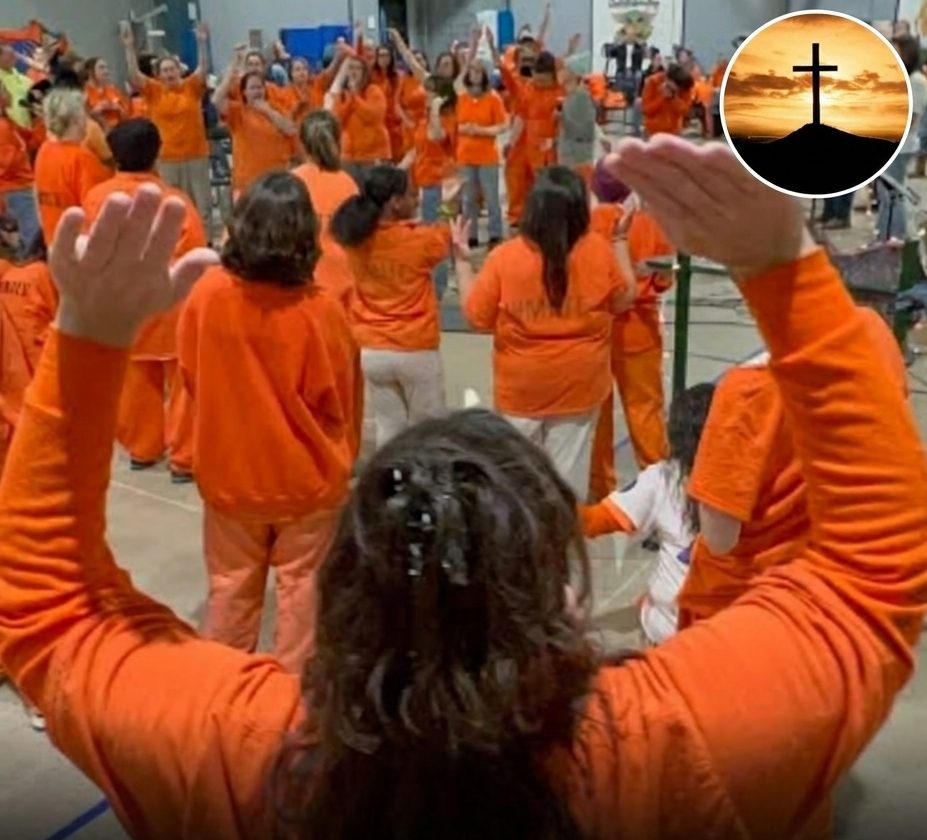
A revival inside an Oklahoma prison drew more than 750 inmates to hear the gospel and left 41 men baptized on the spot at John H. Lilley Correctional Center in Boley. The outreach, led by Pastor Paul Daugherty and a small volunteer team, centered on worship, prayer, meals, Bible distribution, and a clear call to follow Christ.
More than 700 inmates took part in the worship, turning the prison yard into an unlikely scene of singing, preaching, and public spiritual response. More than 400 prisoners reportedly made decisions for Christ, making the event one of the most striking prison ministry moments reported in recent Christian-news coverage.
A Prison Yard Filled With Worship
The gathering brought together inmates, volunteers, and ministry leaders in what many described as a deeply unusual but orderly move of faith inside a correctional setting. The event unfolded at John H. Lilley Correctional Center, a state prison in eastern Oklahoma, where access to religious services and outside ministry often comes in limited, carefully managed windows.
The scale stood out immediately. A small outreach team brought Bibles, Bible-study materials, and meals, but the most visible feature of the day was the response from the prison population itself. Hundreds joined the worship, and the atmosphere remained focused on prayer, singing, and the Christian message of repentance and new life.
That matters because prison ministry rarely trends in the public eye unless something dramatic happens. In this case, the reported response was not measured by spectacle alone. It was measured by attendance, participation, and a large number of inmates stepping forward in a faith decision that Christian ministries see as a sign of spiritual openness in one of the hardest settings imaginable.
More Than 400 Decisions For Christ
The most significant reported outcome was not the size of the crowd but the number who responded to the gospel invitation. More than 400 inmates reportedly committed their lives to Christ during the event, while 41 were baptized immediately afterward. Those baptisms gave the day a visible seal of public faith, linking the prison revival to one of Christianity’s oldest signs of transformation.
In Christian reporting, prison revivals often carry special weight because they combine urgency and hope. The setting is stark. The questions are direct. And the Christian message lands in a place where many listeners are already dealing with guilt, regret, broken relationships, and the long reach of consequences.
That is no small thing. The New Testament often places the gospel in confined spaces, from prison cells to courtrooms to streets filled with people searching for mercy. Paul’s letters, many of them written from imprisonment, remain a reminder that Christian faith has never depended on comfort or freedom to spread. It only needs open hearts and a message that still speaks of redemption.
The Role Of A Small Ministry Team
The outreach team itself was relatively small, which made the reported turnout even more notable. Volunteers brought practical support alongside the worship service, offering meals and study materials to inmates who attended. Those details matter because prison ministry tends to work best when the spiritual appeal is matched by simple acts of care.
In corrections settings, those practical touches can carry real significance. Food, Scripture, and follow-up materials are not decorative additions. They help move an event from a single emotional moment toward something more lasting, especially when participants return to cell blocks where temptation, isolation, and conflict remain part of daily life.
The Christian tradition has long treated prison ministry as a direct expression of the gospel’s reach. In Matthew 25, Jesus identifies care for those in prison as a mark of faithful service. That biblical frame continues to shape how churches and ministries view these events, not as side projects, but as a central part of Christian witness.
Why Oklahoma Matters In This Story
Oklahoma has seen strong interest in revival language in recent years, both inside and outside church circles. The state’s Christian culture has produced a steady stream of large gatherings, prayer events, and outreach efforts aimed at people far from church life. A prison revival fits within that broader pattern, while also carrying the added weight of a captive audience and an unusually direct gospel appeal.
The John H. Lilley Correctional Center event also reflects a growing recognition among many churches that prisons are not spiritually separate from the rest of society. Families, communities, and congregations all feel the impact of incarceration. When inmates respond to the gospel, the ripple effects often reach far beyond the prison walls through letters, visits, and future reentry into society.
For many Christians, that is where the news becomes more than a report about numbers. It becomes a reminder that faith can take root in unlikely places and that repentance is not reserved for the comfortable. Scripture’s promise in 2 Corinthians 5:17 remains central to that hope: “Therefore, if anyone is in Christ, he is a new creation. The old has passed away; behold, the new has come.”
Revival Language And Reported Response
Christian outlets describing the outreach used the language of revival, and the reported results help explain why. A crowd of 751 inmates hearing the gospel, more than 700 joining worship, more than 400 responding in faith, and 41 baptisms together form a picture of broad participation and immediate spiritual response. Few prison ministry events generate that kind of visible response in a single day.
The language of revival is never casual in Christian circles. It points to more than emotion and more than attendance. It points to a sense that God is at work in a concentrated way, drawing people toward repentance, worship, and changed living. In a prison, that expectation carries even greater emotional force because the stakes of change are so immediate and so personal.
The event also highlights the role of outside churches and volunteer teams in sustaining prison ministry. Such efforts often depend on limited resources and careful coordination, yet they can produce strong results when prison officials allow access and inmates respond with seriousness. This revival appears to have done both.
For now, the Oklahoma outreach stands as a notable example of how Christian ministry continues to reach places many people never see, and how the old promise of the gospel still finds fresh ground behind prison walls.