
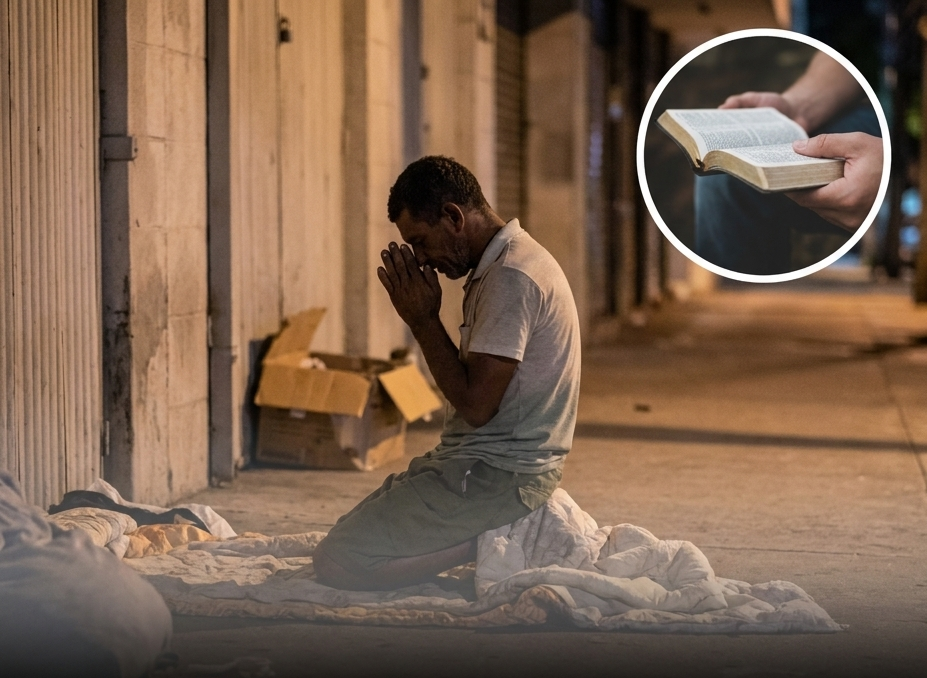
A simple nighttime prayer from a homeless man has turned into an unexpected viral moment, drawing fresh attention to faith, dignity, and the quiet endurance of people living without stable shelter. The image, shared widely online, shows a man kneeling before bed and has stirred a wave of Christian reflection across social media.
For many who encountered the photo, the power of the moment came from its contrast. Here was someone with little material security, yet visibly reaching for God with humility and trust. The scene resonated because it cut through noise and delivered something unmistakably human: a man ending his day in prayer, not in despair.
The Image That Caught Fire
The viral response has centered on the visual itself. People shared the image as a testimony that prayer is not reserved for comfortable settings, polished language, or carefully arranged spiritual moments. It can happen on the street, in a shelter, in a tent, or wherever a weary heart finally rests for the night.
That is part of why the photo spread so quickly. It carried a story in a single frame. Many who viewed it saw more than homelessness; they saw reverence, perseverance, and a reminder that the Lord hears the prayers of the poor as well as the powerful.
In Christian circles, the image has also prompted conversation about what faith looks like when stripped of appearances. The man’s posture before God suggested dependence rather than presentation, a scene that echoed James 2:5, which speaks of God choosing those who are poor in the world to be rich in faith.
A Public Witness In Private Hardship
The reaction online has not focused on celebrity or spectacle. Instead, it has gravitated toward the spiritual weight of the moment. For many viewers, the man’s prayer became a striking example of devotion in hardship, a reminder that hardship does not cancel worship.
Homelessness often carries assumptions of defeat, instability, and social invisibility. Yet this image pushed back against those instincts. It presented a man whose daily circumstances were difficult, but whose spiritual life remained active and alive.
That tension has made the moment especially compelling. Christians across denominations often speak of prayer as breath, dependence, and surrender. This image gave those ideas a visible form, and it did so without polished language or planned messaging.
The response also reflected a broader hunger for authenticity. In a time when much of online attention is driven by outrage or performance, a quiet act of prayer offered a different kind of witness. It did not need embellishment. It simply needed to be seen.
Why The Moment Hit So Deeply
Part of the image’s reach comes from the way it confronts assumptions about blessing and blessing’s appearance. Scripture never ties God’s care to comfort alone, and the story of the man praying before sleep made that truth feel immediate. It also recalled the Lord’s concern for the brokenhearted and the forgotten, a theme woven throughout both Testaments.
Many Christians saw in the image a reminder that prayer is not a reward for having life together. It is often the cry of those who do not. That has made the moment deeply moving for believers who understand prayer as the language of trust when circumstances remain unresolved.
The image also challenged the comfortable religious habits that can slip into routine. A warm house and a closed door do not make prayer more sincere, but they can make it easier to forget its necessity. This scene offered a corrective without preaching. It simply showed a man who still turned toward God at the end of the day.
For those familiar with the Psalms, the photo carried echoes of David’s habit of calling on God in distress. It also brought to mind Jesus’ teaching in Matthew 6, where secret prayer matters more than public display. The man’s humility gave those passages fresh shape.
Online Response And Christian Reflection
As the image circulated, the online response largely fell into three streams: admiration, compassion, and conviction. Some viewed it as a call to deeper gratitude. Others saw it as a prompt to pray more intentionally for people without homes. Many simply held onto the picture as a small but powerful sign that faith endures where life is hardest.
Churches and ministries that work among the unhoused often emphasize the same truth. The people they serve are not interruptions to ministry but part of its center. Moments like this one remind the wider Church that prayer and mercy belong together, and that dignity must never depend on income or address.
There is also a sober side to the attention. Viral images can move hearts, but they can also fade quickly. The challenge for Christians is to let compassion last longer than the scroll. A moved heart can become a giving hand, a listening ear, or a faithful ministry partnership.
That matters because homelessness is not symbolic. It is daily life for millions facing instability, isolation, and the constant search for safety. A prayerful image may open a conversation, but the Gospel has always called believers to more than admiration.
A Reminder Of What God Sees
In the end, the power of the story lies in what it suggests about God’s regard for hidden faith. The world may overlook a man with no fixed address, but the Christian message insists that no prayer is wasted and no heart is invisible before the Lord. The image became moving precisely because it pointed to that deeper reality.
For many who saw it, the man’s posture before sleep became a picture of endurance and hope. It suggested that peace can exist without comfort, and that worship can rise from the hardest places. That is no small thing.
For the Church, the moment carries a steady summons: to notice the overlooked, honor the image of God in every person, and remember that faith shines brightest when circumstances are dim.