
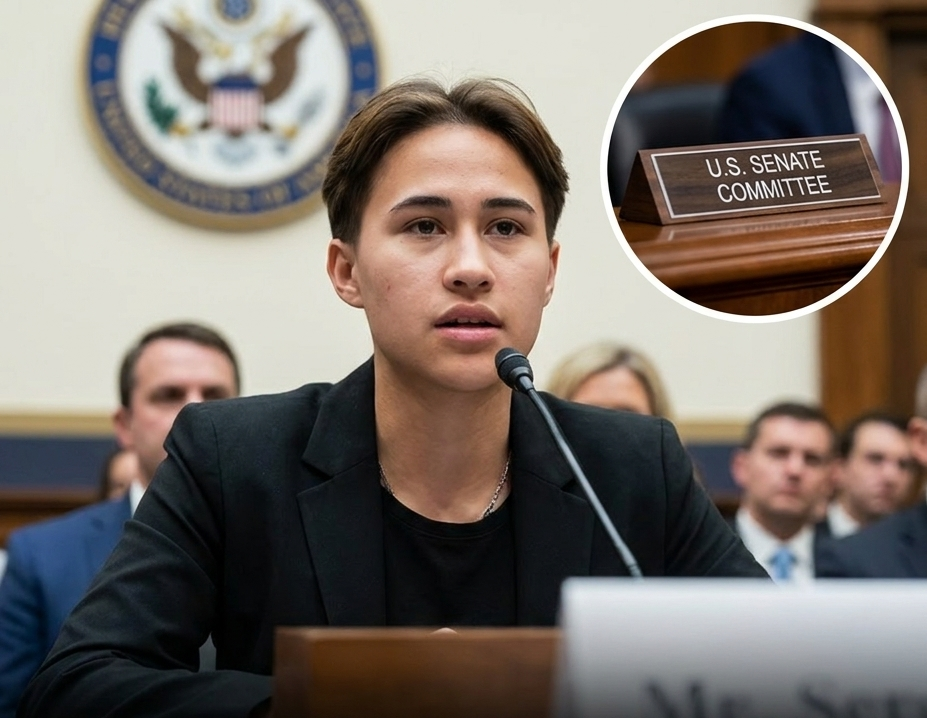
A former transgender-identifying young adult’s Senate testimony has pushed the nation’s fight over pediatric gender medicine back to center stage, with the witness urging lawmakers to curb puberty blockers, cross-sex hormones, and gender surgeries for minors after describing lasting regret over treatment received as a child.
The hearing placed a deeply personal story inside a debate that has already moved through statehouses, courtrooms, hospitals, and school boards. It also sharpened one of the country’s most emotionally charged questions: whether children facing gender distress should be steered toward medical transition, or protected from interventions that may alter bodies before adulthood.
Testimony That Shifted The Temperature
The witness, Chloe Cole, appeared before senators as a detransitioned advocate and framed the issue as urgent and unfinished. The testimony focused on the path from early gender confusion to medical intervention, and then to regret, as lawmakers weighed what role the federal government should play in setting guardrails for minors.
That public turn matters because detransition stories have become increasingly central to the national conversation. They carry a particular force in Washington, where policy arguments often feel abstract until a person describes what treatment looked like in real life and what it left behind.
The hearing came amid growing scrutiny of the standards used to treat gender dysphoria in children and teenagers. Supporters of tighter restrictions view those treatments as irreversible or nearly so, especially when they involve surgeries or long-term hormone use. Opponents see restrictions as political intrusion into medical care that should remain in the hands of families and clinicians.
In the Senate room, those two visions collided again. The result was not a resolution, but a clearer picture of how much the issue still divides the country.
A National Debate Still In Motion
The federal dispute has been building for years. State lawmakers have passed restrictions in some places and protections in others, while hospitals and medical associations have faced intense pressure from both directions. Court challenges have followed, turning what began as a clinical debate into a broad constitutional and cultural conflict.
At the center of it all are minors. Puberty blockers can delay physical development, cross-sex hormones can bring deeper and more lasting bodily changes, and surgeries can leave permanent scars or altered anatomy. Advocates for limits argue that children are too young to make life-altering decisions before their sense of identity settles. Critics of those limits insist that delaying care can deepen distress and worsen mental health outcomes.
The Senate hearing reflected that unresolved tension. It also showed how much the political language has shifted. The focus is no longer limited to abstract claims about rights or autonomy. It now includes the stories of young adults who underwent treatment, lived with the consequences, and later turned around to warn others.
That shift has given the debate new moral weight. In policy terms, it raises questions about informed consent, medical oversight, and long-term outcomes. In human terms, it reaches into family life, adolescent identity, and the kinds of decisions adults make on behalf of children who are still developing.
Why Detransition Stories Carry So Much Weight
Cole’s appearance joined a broader pattern of testimony from people who received gender-related interventions as minors and later regretted them. Those accounts have become especially influential because they complicate the assumption that transition always brings clarity or relief.
For lawmakers, those stories are difficult to ignore. They suggest that medical boundaries may have been set too loosely, or that institutions rushed children toward a path that was not truly reversible. Supporters of reform have used such testimony to argue for age limits, stronger review processes, and a slower approach to treatment.
Opponents respond that any policy shaped mainly by detransition narratives risks overlooking the many patients who report satisfaction with treatment. They argue that public discussion should not turn a small but visible group into the rule for everyone else. But the growing visibility of detransitioners has clearly altered the shape of the debate, especially in legislatures that once treated the issue as settled.
That is no small thing. In a debate where medical, psychological, and ethical claims often overlap, real-life testimonies can carry more influence than technical language ever will.
The Christian Response And The Wider Moral Frame
Christian commentary in the wake of the hearing has largely treated the issue as more than a policy matter. It has been framed as a question about the meaning of human identity, the integrity of the body, and the duty to protect children from harm.
Many Christian writers and organizations have pointed back to the opening chapters of Genesis, where humanity is created male and female. For those voices, that is not a minor theological detail. It forms the basis for a biblical anthropology that sees sex as part of God’s design, not a feature that can be revised at will.
Genesis 1:27 captures that conviction plainly: “So God created man in his own image, in the image of God he created him; male and female he created them.” In Christian moral reasoning, that verse often functions as a starting point for both truth-telling and care, especially when the conversation involves children.
At the same time, many Christian leaders have stressed that compassion cannot be separated from conviction. The call is not to mock or dismiss people experiencing gender dysphoria, but to respond with pastoral patience, truthful language, and real support. In that framework, care means walking with suffering people, not affirming every proposed solution.
Medical Ethics, Family Pressure, And The Church’s Concern
Churches across denominations have felt the effects of the debate in counseling rooms, youth ministries, and families. Parents increasingly ask how to respond when a child expresses confusion about sex or gender. Pastors and counselors face a hard task: speaking honestly about the body while avoiding harshness that can deepen shame or isolation.
That pressure has helped make the issue more than a partisan fight. It reaches into ordinary Christian life. It also exposes a deeper question about authority: whether the definition of personhood comes from inner self-definition or from the Creator who gives the body meaning.
For many Christians, the Senate hearing reinforced the conviction that children need protection, patience, and time. They need adults willing to slow down rather than rush into medical decisions with lifelong consequences. They need communities that can offer care without collapsing truth into affirmation.
Others in the broader public continue to defend medical transition as a necessary response to suffering, especially for teens who experience severe distress. But the hearing showed that confidence in those interventions is no longer as broad as it once was. More families are asking whether medicine has moved faster than wisdom.
What Comes Next In Washington
The Senate hearing did not settle federal policy, but it kept the issue alive in a chamber where legislation, oversight, and oversight hearings can shape the national agenda. Future action could involve restrictions, reporting requirements, or broader scrutiny of how medical institutions handle minors with gender dysphoria.
What happens next will likely depend on more than one testimony. It will depend on whether lawmakers see the growing number of regret stories as isolated cases or as evidence of a systemic problem. It will also depend on whether federal leaders believe this is a matter for national standards or local medical judgment.
For Christian readers, the hearing offered a reminder that public policy always rests on some view of the human person. The question is not whether a worldview is present, but which one guides the decisions. And in this debate, the difference between seeing the body as gift or as raw material remains profound.
The Senate may keep debating statutes and standards, but the deeper hope is that children facing confusion will be met with truth, patience, and mercy before irreversible choices are made.