
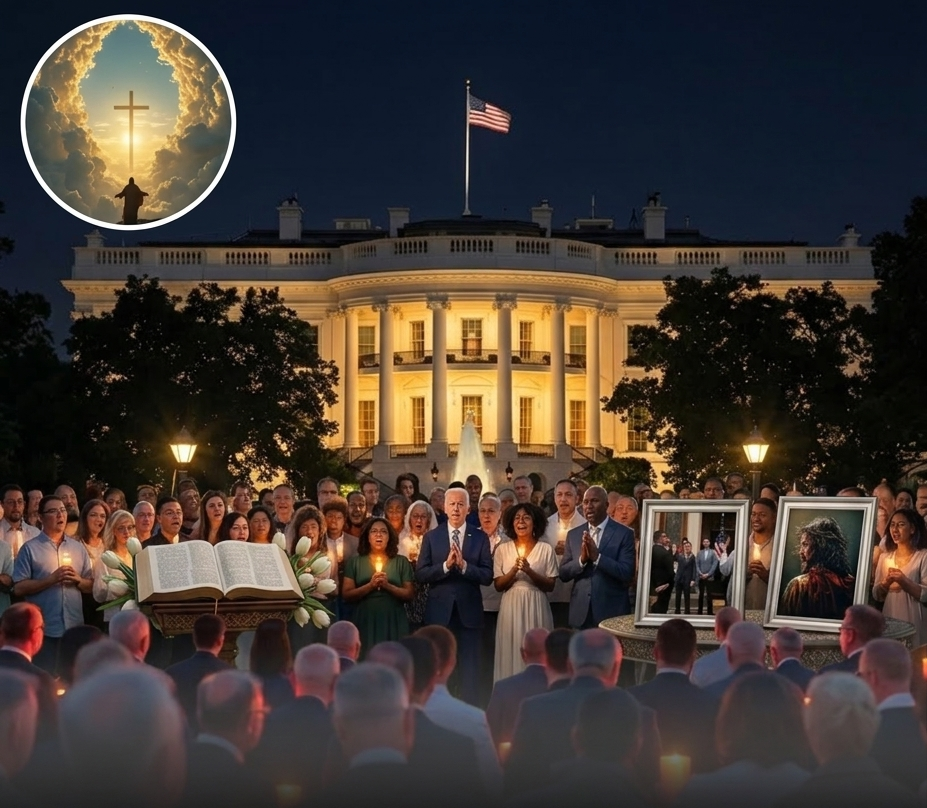
A large White House-linked worship and prayer gathering drew Christians to Washington, D.C., this week as pastors, musicians, faith leaders, and public officials gathered for a day framed as a call to rededicate the nation to God during the America 250 commemoration.
The event centered on Christian music, public prayer, and pastoral messages that emphasized repentance, gratitude, and spiritual renewal. Organizers presented the gathering as more than a celebration, casting it as a national moment of recommitment that unfolded across most of the day in downtown Washington.
A Day Of Worship In The Nation’s Capital
Thousands of believers filled the gathering space for extended worship, with songs of praise, prayer for the nation, and reflections on the role of faith in public life. The atmosphere was marked by visible expressions of devotion, including lifted hands, singing, and sustained intercession for families, communities, and government leaders.
The event drew attention not only because of its size, but because of its setting. Washington has often hosted civic ceremonies, but a prayer and worship event with White House ties carries a different kind of weight. It placed Christian language and devotional practice at the center of a public gathering on a national stage.
That matters in a country where faith and politics continue to intersect in complicated ways. For many attendees, the day represented a straightforward expression of Christian witness. For critics, it raised familiar concerns about the line between public religion and governmental power.
Officials, Pastors, And Public Figures Share The Stage
The lineup brought together Christian pastors, worship leaders, and public officials connected to the current White House and Trump administration orbit. At least one rabbi also appeared among the participants, underscoring efforts to frame the event as broadly patriotic, even while its spiritual center remained distinctly Christian.
Messages throughout the gathering focused on the need for moral renewal and a return to God. The emphasis on repentance and spiritual renewal echoed language familiar across evangelical, charismatic, and many mainline Christian settings, even as the event itself carried a strong public-policy backdrop.
Some of the most striking moments came not from speeches alone, but from the sustained worship itself. For hours, participants sang, prayed, and listened to calls for national blessing. The day unfolded like a modern civic revival meeting, with a tone that blended worship service, public ceremony, and patriotic observance.
America 250 gives the gathering broader symbolism. The nation’s approaching 250th anniversary has already prompted a wave of commemorations, and this one placed Christian devotion squarely inside that build-up. It suggested that for many believers, the story of America’s future cannot be separated from questions of faith.
Christian Nationalism Debate Follows The Event
The gathering quickly became a flashpoint in the wider debate over Christian influence in public life. Critics described it as an expression of Christian nationalism and raised concerns that it blurred the line between church conviction and state authority.
Those concerns have surfaced repeatedly in recent years as public displays of Christianity have grown more visible in political spaces. Supporters often view such events as a long-overdue acknowledgment of the country’s religious heritage. Opponents see a danger in using national institutions to promote one tradition above others.
For churches, the debate is not abstract. Congregations across denominations continue to wrestle with how to speak about the nation without confusing allegiance to Christ with loyalty to any party or administration. The New Testament’s call to pray for rulers stands alongside its warning that earthly powers never receive ultimate devotion.
That biblical tension has shaped Christian public life for generations. Jeremiah’s instruction to seek the welfare of the city, Paul’s call to intercede for leaders, and Jesus’ insistence that his kingdom is not of this world all remain part of the conversation whenever faith enters the public square.
Why The Event Drew Such Strong Attention
The scale of the gathering helped amplify its impact. Large attendance, extended worship, and high-profile participation made it feel less like a niche religious event and more like a public statement about the place of Christianity in American life.
The visual language told its own story. Images and videos circulated broadly online, showing believers worshiping in a national setting and praying over the future of the country. For many Christians, that was a source of encouragement and joy. For others, it reinforced anxieties about how closely religion and political power can be tied.
The debate is not new, but the moment feels especially charged. America’s semiquincentennial has invited reflection on national identity, civic memory, and the values that should shape public life. A worship gathering tied to those celebrations naturally carried symbolic force far beyond the room itself.
And that force was spiritual as much as political. The event’s central claim was that prayer still matters, that worship still unites, and that public confession of faith can still point a nation toward humility before God. For many Christians present, that conviction was not ornamental. It was the reason they came.
What It Means For The Church Moving Forward
The gathering also highlighted a broader question facing the church in America: how to engage the public square without losing the distinctiveness of the gospel. Many Christians welcome open opportunities to pray for the nation, especially at moments of cultural uncertainty. Others worry that such events can flatten Christian witness into civic branding.
Different denominations are likely to read the day in different ways. Evangelicals and charismatics may see a bold act of public faith. Mainline Protestants may emphasize prayer while remaining cautious about political associations. Catholics and Orthodox readers may note the importance of liturgy, repentance, and public morality, while still resisting easy merger with national identity.
Still, the gathering revealed a shared desire that runs across many traditions: the hope that God would shape the conscience of a nation. Whether framed as revival, reform, or renewal, that longing remains deeply rooted in Christian life. It reflects a belief that prayer is not a performance, but an appeal to the living God.
For now, the event stands as both a worship service and a cultural marker, revealing how deeply questions of faith, nationhood, and public witness remain intertwined in American Christianity. The coming months will show whether it becomes a momentary spectacle or a lasting sign of spiritual hunger, but the prayer itself has already been lifted.