
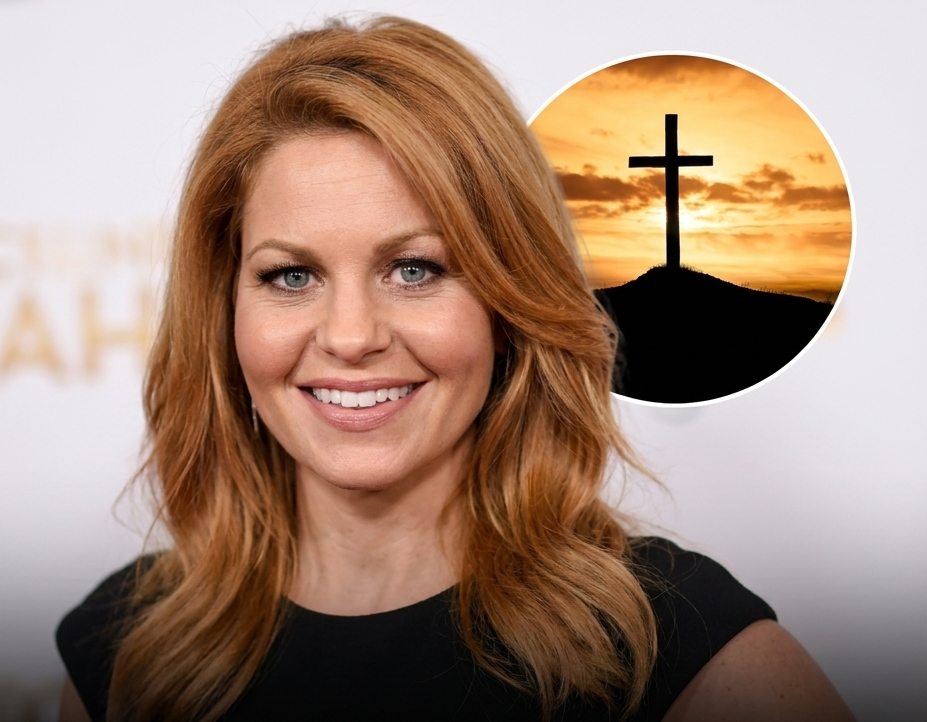
Candace Cameron Bure called a presidential Scripture reading in Washington, D.C., a historic moment this week as the public Bible event America Reads the Bible moved into its seven-day run ahead of the nation’s 250th anniversary. The actress and Christian advocate, serving as a national spokesperson for the gathering, framed the occasion as more than ceremony, describing it as an exciting public witness to Scripture.
The event places the Bible at the center of a national stage in a way few modern gatherings have attempted. Running 9 a.m. to 9 p.m. ET for seven straight days, it brings hundreds of Christian leaders into a public reading that stretches from Genesis to Revelation. Livestream access through Great American Pure Flix has widened the audience well beyond Washington.
Scripture Read Before A National Audience
Among the most closely watched moments in the event is President Trump’s scheduled reading of 2 Chronicles 7:11–22. That passage carries weight in any setting, but especially in one built around public Scripture reading during a year when attention has already turned toward America’s semiquincentennial.
Bure helped open the event publicly and has treated the gathering as a cultural moment with spiritual significance. Her emphasis has rested less on politics than on the unusual image of Scripture being read aloud, in full view, before a broad national audience. That is no small thing.
The scale matters. Organizers have described nearly 500 Christian leaders taking part, creating a multi-day relay intended to move through the entire Bible in public. The structure itself reflects a simple but striking idea: that Scripture can still gather people when it is read plainly and without embellishment.
A Public Bible Reading With National Timing
America Reads the Bible arrives at a symbolic moment in American civic life. The event is tied to the country’s 250th anniversary and, by design, places biblical literacy and public faith in direct conversation with national identity.
For many Christians, the timing naturally evokes older traditions of public devotional life, when Bible reading carried a more visible place in civic and communal settings. In this case, the event also reflects the persistence of a distinctly modern evangelical instinct: to use media, live streaming, and large-scale gatherings to make Scripture accessible.
Bure’s role adds another layer. Known widely through entertainment and family programming, she has also spent years speaking openly about her faith. Her presence gives the event a familiar face while tying it to a broader pattern of Christian witness in public life.
That blend of celebrity, Scripture, and national ceremony has helped drive interest online. Supporters have treated the event as a bold display of biblical values, while broader observers have taken note of how unusual it is to see a president and a major public reading initiative converging in one setting.
What The Event Is Trying To Do
The core aim of the gathering is straightforward: read the Bible from start to finish, aloud, in public. That simplicity is part of its appeal. In an age of endless commentary, the event leans on the ancient power of Scripture itself.
Christians across denominations have long regarded public reading as an essential part of worship and formation. From synagogues to churches, the hearing of God’s Word has shaped belief as much as private study. This event seeks to place that practice in a national setting, where thousands can listen live and millions more can stream it later.
The public nature of the reading also gives it a distinctly communal feel. Different leaders, backgrounds, and traditions are folded into a single shared act of hearing Scripture. In that sense, the event carries a kind of ecumenical energy even as it remains firmly Christian in focus.
Why Bure’s Response Drew Attention
Bure’s praise for the presidential reading resonated because it presented the moment as both surprising and deeply meaningful. The language of historic significance has become common in public life, but here it rests on a specific claim: that a national leader reading the Bible before a public audience still matters.
Her reaction also gestures toward a broader longing among many believers who want Scripture to remain visible in the public square. For some, that visibility signals respect for the Bible’s authority. For others, it offers a rare pause from the noise of political polarization.
At the same time, the event has invited reflection on what public faith looks like in a pluralistic nation. A Bible-reading marathon does not settle America’s debates about religion and government. But it does reveal that public expressions of Christianity still carry emotional and cultural force.
Many churches have long encouraged believers to read Scripture aloud at home, in worship, and in small groups. This event pushes that practice onto a much larger stage, turning a familiar Christian discipline into a national broadcast.
A Familiar Pattern With A Larger Platform
Public Bible readings are not new, but this one stands apart because of its duration, its scale, and its national framing. Seven days of continuous reading creates a rare rhythm, one that invites patience rather than quick consumption.
The livestream format expands that reach still further. For Christians unable to attend in Washington, the digital access creates a common experience across time zones and church traditions. In practical terms, the event becomes less like a single rally and more like a shared act of listening.
The involvement of nearly 500 Christian leaders also signals broad organizational support. That many participants give the project a sense of continuity and seriousness, suggesting it is meant to be remembered as more than a symbolic gesture.
And because the Bible itself remains the center, the event avoids the usual churn of personality-driven religious news. Attention may come because of Bure or the president, but the reading itself keeps pointing elsewhere, toward the text Christians believe carries enduring authority.
What Believers Are Seeing In The Moment
Among many Christians, the reaction has been one of gratitude mixed with surprise. The sight of Scripture receiving public attention at this level has stirred interest among believers who see it as a reminder that biblical faith still has cultural presence.
For evangelical readers especially, the event neatly fits a longstanding conviction that the Bible should not be hidden away. Public reading has always had a formative effect in Christian life, whether in parish churches, revival meetings, or family devotions. Here, that ancient pattern is unfolding inside a modern media framework.
The broader reaction online has been similarly enthusiastic in many circles, with supporters treating the event as a sign of spiritual openness. The response has also reflected a longing for national moments that feel less fragmented and more rooted in common moral language.
That longing is not confined to one denomination or one political tribe. Catholics, Protestants, and Orthodox Christians alike understand the Bible as foundational, even when they differ on interpretation and practice. A public reading that spans Genesis to Revelation naturally touches that shared ground.
A Historic Moment, Still Unfolding
Whether the event becomes a lasting cultural marker will depend on how it resonates beyond this week in Washington. But its immediate significance is hard to miss: the Bible is being read publicly, at length, in the nation’s capital, with major participation and clear national symbolism.
For Bure, that alone appears to justify the language of historic significance. Her response has helped cast the reading not as a stunt but as an invitation to remember the place Scripture has long held in Christian life.
As the reading continues through its final days, the event stands as a reminder that when the Bible is read aloud, it still gathers attention, conviction, and hope in ways that are difficult to ignore.