
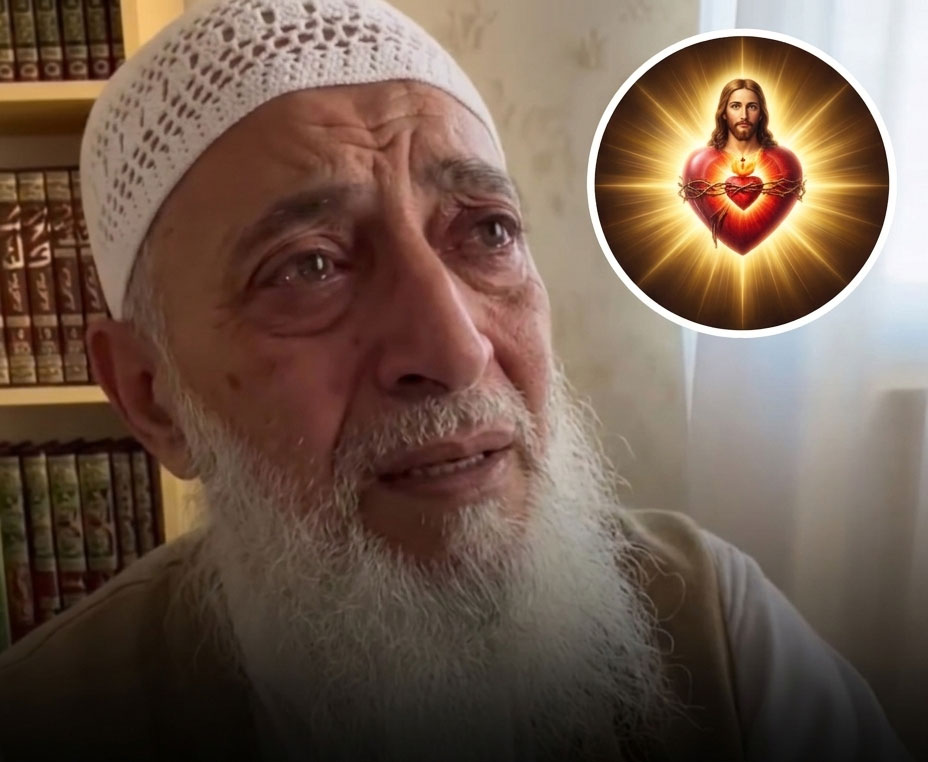
Imagine living your entire life under the strict, unwavering umbrella of a specific faith, only to have a single, uninvited moment shatter your reality and rebuild it in an instant. For many in the Middle East and throughout the Islamic world, this isn’t just a hypothetical scenario—it is a lived experience that is currently spreading like wildfire. While headlines are often dominated by political strife and cultural division, a much quieter, more personal revolution is taking place in the hearts of thousands. It starts with a dream, a vision, or a sudden, overwhelming sense of peace that doesn’t make sense on paper. This is the story of how a man raised in the heart of Islam found himself face-to-face with a figure he never expected to meet, and why his life will never be the same.
The Man Who Had Everything but Found He Had Nothing
To understand the weight of a conversion, you first have to understand the life that was left behind. “Ahmed” (a pseudonym used to protect his safety) was not a casual believer. He was a man of the mosque, a person who found his identity in the rhythmic prayers of the Salah and the community of his heritage. To Ahmed, Jesus—known as Isa in the Quran—was a respected prophet, a messenger of the past, but certainly not the Son of God or a personal savior. His world was ordered, predictable, and deeply rooted in a tradition that stretched back centuries.
However, beneath the surface of his religious devotion, Ahmed felt a growing, gnawing sense of emptiness. The rituals were precise, but they felt increasingly hollow. He performed the required deeds, fasted during the heat of Ramadan, and gave to the poor, yet the peace he was promised felt like a horizon that kept moving further away the closer he walked toward it. He wasn’t looking for a new religion; he was looking for a reason to keep going in the one he had.
The Night the Room Filled with Light
The encounter didn’t happen in a church or during a theological debate. It happened in the quietest, most vulnerable hours of the night. Ahmed describes waking up in his room, not to a sound, but to a presence. He didn’t see a ghost or a hallucination; he saw a person. The air in the room became thick with a love so intense it felt physically heavy. Ahmed recalls being unable to speak, his breath catching in his throat as a figure dressed in brilliant white stood at the foot of his bed.
There was no judgment in the eyes of the man in the vision. There was only a recognition that felt like being seen for the first time in his life. Ahmed describes the voice not as an audible sound, but as a resonance within his chest. The message was simple: “I am the Way you have been seeking.” In that moment, the theological walls Ahmed had built for forty years didn’t just crack—they evaporated. The figure was unmistakably Jesus, and He wasn’t a historical footnote; He was alive, He was present, and He was calling Ahmed by name.
Why Jesus is Appearing to Muslims in Record Numbers
Ahmed’s story is far from an isolated incident. Across the globe, reports are surfacing of “Man in White” encounters. From the bustling streets of Tehran to the remote villages of Northern Africa, people are reporting vivid, life-altering dreams of Jesus. To many Westerners, this sounds like the plot of a supernatural thriller, but for those in the Muslim world, it is becoming a common phenomenon.
Theologians and sociologists are baffled, but the converts themselves have a simple explanation: where the Gospel is difficult to access through traditional means, the message is finding a way through the subconscious. In regions where owning a Bible can lead to imprisonment, these visions act as a direct invitation. For Ahmed, the dream wasn’t just a “cool experience”; it was a rescue mission. It bypassed his intellectual defenses and spoke directly to the void he had been trying to fill with religious duty.
The High Cost of a Newfound Faith
While the encounter with Jesus brought Ahmed an internal joy he had never known, the external consequences were immediate and terrifying. In many Islamic communities, leaving the faith is seen as the ultimate betrayal—not just of a religion, but of family, country, and heritage. When Ahmed shared his experience with his closest friends, the warmth of the community he once cherished turned cold in an instant.
He faced the reality of “honor” repercussions. His business suffered, his social standing vanished, and he had to navigate the heartbreak of being viewed as an apostate by his own parents. Yet, when asked if he regrets the vision, his answer is immediate and unwavering. “How can I regret seeing the sun after living in a dark cave?” he asks. The “cost” of his conversion, while high, paled in comparison to the value of the peace he had finally found. He traded a life of “trying” for a life of “trusting.”
A Radical Shift from Duty to Relationship
The most profound change in Ahmed’s life wasn’t his change in diet or his new habits; it was his shift in perspective. For years, God was a distant judge, a figure to be feared and appeased through perfect performance. After his encounter with Jesus, God became a Father. This shift from “duty” to “relationship” is the core of why these stories are so powerful.
Ahmed describes his new prayer life not as a set of required recitations, but as a constant conversation. The fear of making a mistake and being punished has been replaced by the security of being loved despite his mistakes. This radical grace is what makes the message of Jesus so magnetic to those who have spent their lives under the weight of legalism. It isn’t about being “better”; it’s about being “made new.”
What This Means for the Future of Global Faith
As more men and women like Ahmed come forward with their stories, the religious landscape of the world is shifting in ways we are only beginning to understand. These conversions are not the result of political pressure or clever marketing campaigns. They are the result of personal, undeniable encounters that transcend borders and bypass censors.
Ahmed’s journey serves as a powerful reminder that faith is often found in the places we least expect it. It reminds us that no matter how deep our traditions or how high our walls, the human heart is always searching for something more. For a Muslim man in a quiet bedroom, that “something more” had a name, a face, and a message of hope that changed everything. The “Man in White” continues to walk through the dreams of the weary, proving that sometimes, the most important journey you’ll ever take happens without you ever leaving your room.