
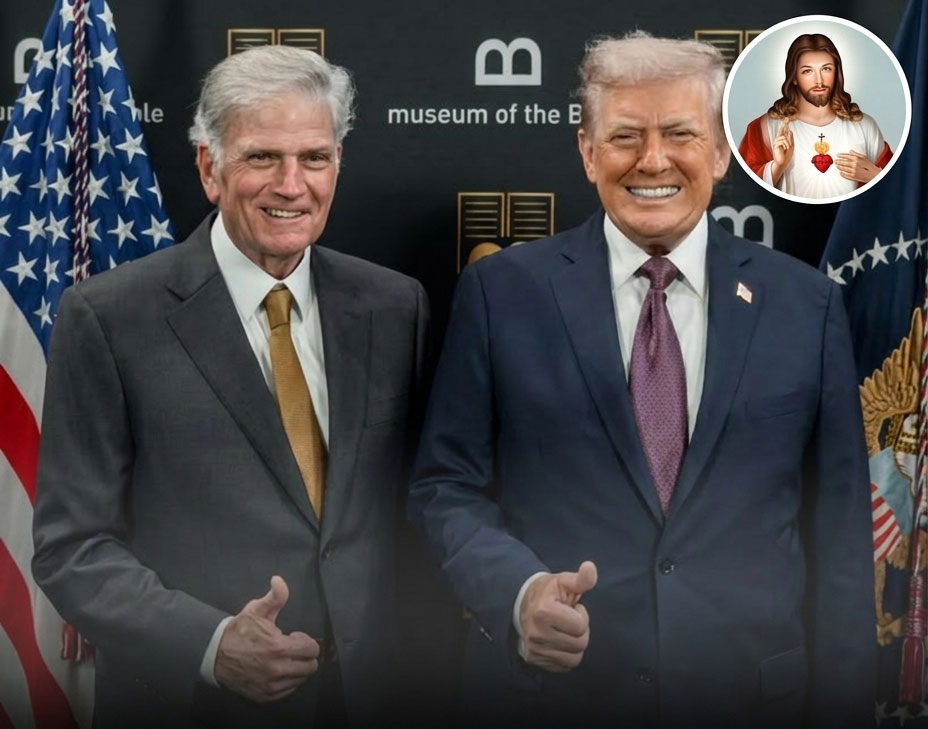
The air in the room usually shifts when Franklin Graham enters, but recently, it hasn’t just shifted—it has reached a boiling point. The son of the legendary “America’s Pastor,” Billy Graham, has never been one to shy away from a microphone, but his latest defense of former President Donald Trump has sent shockwaves through the pews and the political hallways alike. Imagine a message so potent that it makes lifelong friends stop speaking and causes congregation members to rethink their Sunday morning plans. This isn’t just about politics; it’s about a clash of worldviews, a defense of a “flawed vessel,” and a spiritual battle cry that has ignited a firestorm of debate across the nation. Whether you view him as a prophetic voice or a political lightning rod, you cannot ignore the weight of his words.
Is He a Prophet or a Politician? The Growing Divide
For many evangelicals, Franklin Graham represents a steadfast anchor in a rapidly changing moral landscape. However, his critics argue that he has traded his father’s “big tent” approach to the Gospel for a very specific, very partisan political brand. When Graham speaks about Trump, he doesn’t just talk about policy; he talks about providence. He often frames the former president as a man chosen for a specific time and a specific purpose, regardless of his personal history or rough-around-the-edges rhetoric. This framing has created a massive rift. On one side, you have millions of believers who see Graham’s stance as a courageous defense of religious freedom. On the other, a growing chorus of voices—including some within his own faith—worry that the message of the Cross is being overshadowed by the shadow of the MAGA hat.
The “Flawed Vessel” Argument That Changes Everything
One of the most engaging aspects of Graham’s defense is how he handles Trump’s personal controversies. He doesn’t ignore them; he recontextualizes them. Graham frequently points to biblical figures like King David or Moses—men who were deeply flawed, committed grave sins, yet were used by God to lead nations and achieve great things. By using this “flawed vessel” narrative, Graham provides a spiritual permission slip for his followers to support a leader whose lifestyle might not always align with traditional Sunday school teachings. This argument is incredibly effective because it shifts the focus from the man’s character to his results. To Graham’s supporters, it doesn’t matter if the messenger is imperfect if the message (and the policy) protects their values. This specific rhetorical move is exactly what keeps the debate raging: can you separate the person from the platform?
Why the “Silent Majority” Is Not So Silent Anymore
Graham’s words act as a megaphone for a segment of the population that feels increasingly sidelined by mainstream culture. When he speaks about the “attacks” on Trump, he is also speaking to the people who feel that their own faith and way of life are under siege. To them, Graham isn’t just defending a politician; he is standing up for them. This creates a powerful emotional bond. When a news cycle hits Trump particularly hard, Graham’s social media feeds often light up with calls to prayer and messages of solidarity. This isn’t just “clickbait” to these followers; it is a spiritual lifeline. The debate isn’t just happening on cable news; it’s happening at dinner tables where children are questioning their parents’ allegiances, and Graham’s strong words are often the catalyst for these intense family discussions.
The Global Impact: More Than Just an American Story
It is easy to forget that Franklin Graham heads Samaritan’s Purse, one of the largest relief organizations in the world. His influence stretches far beyond the borders of the United States. When he speaks with such intensity about American politics, it reverberates through international Christian communities. Leaders in Africa, South America, and Eastern Europe watch Graham closely. For many, he is the face of American Christianity. When he ties the fate of the Church to the success of a specific political figure, it changes how the world views the American evangelical movement. Some international partners see it as a sign of strength and a blueprint for their own nations, while others worry that the “American Gospel” is becoming too entwined with American nationalism.
The Social Media Firestorm: A War of Words and Likes
In the digital age, a “strong word” from Graham doesn’t just stay in a press release; it becomes a viral sensation within minutes. His Facebook posts often garner hundreds of thousands of interactions, becoming a digital battlefield where the debate plays out in real-time. You’ll see thousands of “Amen” comments sitting right next to scathing critiques from people who feel he is led astray. This digital footprint ensures that the debate never truly dies down. Every time Graham doubles down on his support, the cycle begins anew. It’s a fascinating look at how faith is being mediated through screens, where a single paragraph from a religious leader can dictate the news cycle for forty-eight hours.
A Legacy at the Crossroads: What Happens Next?
The ultimate question that haunts this entire debate is one of legacy. Billy Graham was known for being the “chaplain to the presidents,” maintaining relationships with leaders on both sides of the aisle to ensure the Gospel had a seat at the table. Franklin Graham has chosen a different path—one of clear-cut lines and unapologetic stances. As he continues to use his platform to bolster Trump, he is effectively redefining what the Graham legacy looks like for the 21st century. Will he be remembered as the man who saved the soul of the country by fighting in the political trenches, or as the man who narrowed the entrance to the church by building a political wall?
The Unending Conversation and the Power of Choice
As we look at the firestorm ignited by Franklin Graham’s words, one thing is certain: he has succeeded in making people pay attention. The debate he sparked is healthy in one sense—it forces people to examine what they truly value and where they place their ultimate trust. Whether you agree with his “strong words” or find them deeply troubling, they serve as a mirror to the current state of the nation. We are a people divided, searching for leadership, and wrestling with the age-old question of how faith should interact with the halls of power. Graham’s message hasn’t just started a conversation; it has demanded that everyone, from the pulpit to the pavement, take a side in the most compelling drama of our time.