
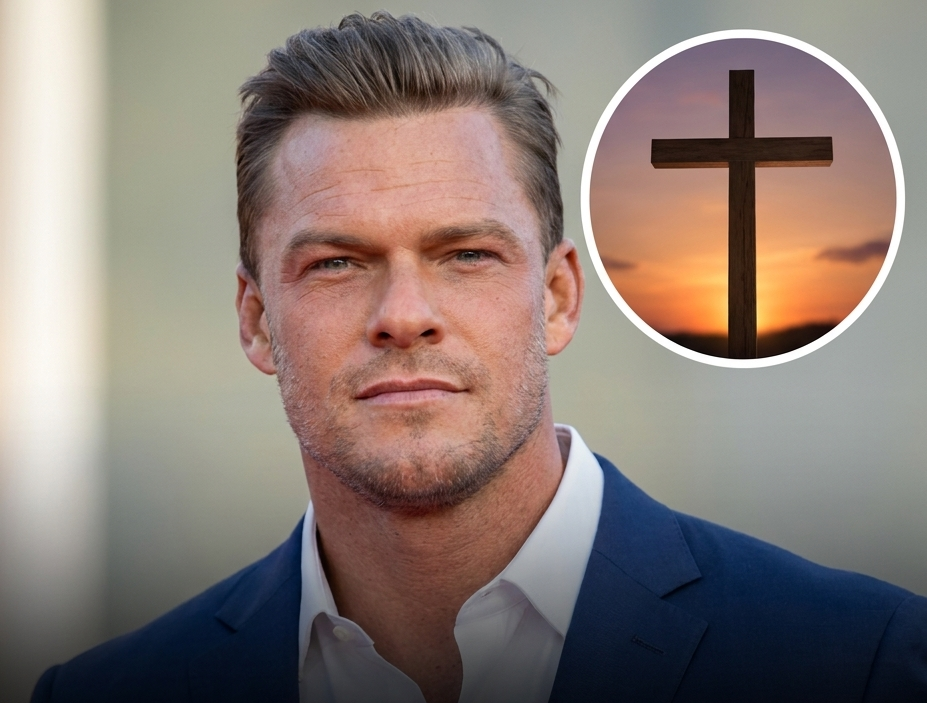
Alan Ritchson is pressing a line that rarely sits comfortably in Hollywood: faith matters more than approval. In recent interviews and Christian coverage, the Reacher star has kept speaking openly about his Christian beliefs, even as he faces criticism from both secular observers and some in the church.
The latest attention around Ritchson has centered less on a new project than on a familiar pattern. He has continued using his public platform to discuss Scripture, current events, and the tension between conviction and cultural pressure through his InstaChurch content. That choice has made him a visible example of what public Christian witness can look like in mainstream entertainment.
Faith In Public View
Ritchson’s comments fit a broader portrait that has been taking shape for months: he is not trying to present faith as a private accessory to a successful acting career. Instead, he has appeared willing to let belief remain part of his public identity, even when that invites pushback.
Christian outlets have highlighted that stance as unusual in an industry where religious conviction is often treated as a liability, especially when it is expressed without apology. That matters because the pressure for celebrity figures is not only to be likable, but to be legible to the culture that rewards them. Ritchson seems increasingly uninterested in chasing that approval.
His public remarks have also shown frustration with parts of the Christian community, not only with secular critics. That tension has added another layer to the story, since it suggests that the challenge is not merely Hollywood hostility, but the difficulty of living consistently as a Christian when expectations come from every side.
Hollywood Success And Christian Conviction
Ritchson’s career has made the issue impossible to ignore. He has become one of the more recognizable faces in mainstream streaming television through Reacher, while also remaining linked to Christian discussion through his own online teaching and commentary. Few actors inhabit both spaces so openly.
That visibility has given his words extra weight. When a rising star speaks about Scripture, moral conviction, and the cost of holding to Christian beliefs, it lands differently than when such themes stay confined to church circles. His example offers a case study in how faith can remain central rather than ornamental in a highly secular industry.
The current coverage does not present a dramatic scandal or change of direction. Instead, it reinforces a steady pattern: Ritchson is continuing to speak plainly, continuing to draw criticism, and continuing to treat faith as more important than image management. That is no small thing in a culture that often rewards silence over sincerity.
Why Christians Are Paying Attention
For many Christian readers, the story is not primarily about celebrity at all. It is about witness. Ritchson’s approach raises a familiar biblical tension between being in the world and shaped by it, a tension that runs through the New Testament and remains difficult in every era.
The apostle Paul’s words in Romans 12:2 still feel close to the center of the issue: “Do not be conformed to this world, but be transformed by the renewal of your mind” (ESV). Ritchson’s public posture, at least in current coverage, suggests he is trying to live that out in a setting that often rewards compromise or careful ambiguity.
At the same time, his willingness to push back on criticism from Christians as well as non-Christians shows how complicated public faith can become. Churches often encourage boldness, but they also differ sharply on what faithful boldness should look like. In that sense, Ritchson’s experience reflects a wider church conversation, not just a celebrity moment.
His use of InstaChurch has also helped position him as more than an actor with religious opinions. The platform gives him a way to speak directly about the Bible and current events, and it keeps his Christianity visible rather than tucked away for interviews or promotional seasons. For supporters, that consistency is part of the appeal.
Pushback From Critics And The Cost Of Visibility
Public Christian witness in entertainment rarely comes without cost. Ritchson has faced criticism for his views and for his place in roles that some Christians suspect or some secular critics challenge. That sort of pressure can tempt public figures either to soften their convictions or to present them as branding tools.
He appears to be resisting both options. His comments have suggested that the goal is not to win universal approval but to remain grounded in what he believes God requires. In a media world built around image, that kind of steadiness can feel almost countercultural.
The Christian response to his openness has been mixed, which makes the story more interesting, not less. Some readers see courage. Others see the unavoidable messiness of speaking for Christ while working inside an industry with very different values. Both reactions point to the same reality: faith in public is rarely neat.
The New Testament does not promise ease for believers who speak plainly. Jesus’ words in John 15:18 carry that edge: “If the world hates you, know that it has hated me before it hated you” (ESV). Ritchson’s current public profile reflects that old friction in a modern setting, where the pressure comes through headlines, social media, and career expectations.
A Broader Test For Celebrity Faith
Ritchson’s situation also speaks to a larger trend among Christian entertainers. Many navigate a careful middle path, trying to avoid alienating either secular audiences or church audiences. That can lead to a polished public faith that rarely risks anything.
His recent comments suggest a different model. He seems willing to accept criticism if it means keeping faith visible. For Christian observers, that raises a serious question about what courage looks like when belief carries social and professional consequences.
It also presses the church to think carefully about how it evaluates public figures. Christians often want celebrities to represent faith cleanly, but real discipleship rarely fits cleanly into fame. The public nature of Ritchson’s testimony is a reminder that Christian witness can be messy, exposed, and still genuine.
In the end, the story is not about whether Ritchson has become perfect or unassailable. It is about a man in a highly watched industry choosing not to mute his convictions. In a culture that rewards constant adjustment, that choice stands out, and it leaves a simple question hanging in the air: whether faith will remain visible when approval does not come.