
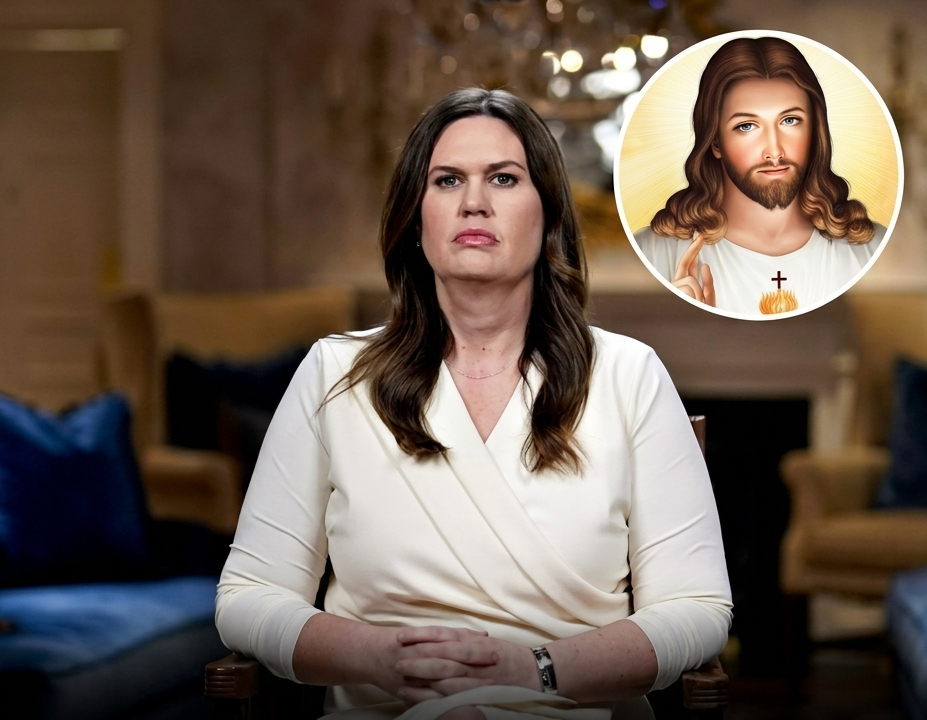
Arkansas Gov. Sarah Huckabee Sanders used her April 8, 2026 State of the State address in Little Rock to make an openly Christian declaration, telling lawmakers and viewers that “Jesus is our living hope” for individuals, for Arkansas, and for the country. She also tied that faith language to policy, linking her proposed 1033 initiative to Luke 10:33, the Good Samaritan passage.
The speech came as Arkansas opened its 2026 fiscal session, placing Sanders’ remarks squarely in the center of public business rather than in a private devotional setting. That made the moment especially notable. The governor did not simply mention religion in passing; she placed Jesus at the heart of a major address and then connected that confession to the state’s legislative agenda.
A Faith Claim In A Government Address
Sanders’ statement landed as one of the most talked-about lines from the address because it drew a direct line between personal faith and public leadership. In a political climate where many elected officials keep religious convictions vague or carefully compartmentalized, the address stood out for its clarity.
The governor’s words also carried biblical weight. The phrase “living hope” echoes 1 Peter 1:3, where the apostle writes that God has caused believers “to be born again to a living hope through the resurrection of Jesus Christ from the dead.” In Christian ears, the line is not a generic religious flourish. It is a resurrection claim.
That matters because it framed the speech around hope that is not abstract or merely civic. It pointed to Christ as the source of hope in public life as well as private life, a theme that has long resonated with Christians across denominations, from evangelical Protestants to Catholics and Orthodox believers.
The 1033 Initiative And Luke 10:33
Sanders also connected her budget and policy priorities to the proposed 1033 initiative, which she said draws its name from Luke 10:33. That verse describes the Good Samaritan and has long served as a touchstone for Christian service, neighbor-love, and practical compassion toward people in need.
In Scripture, the Good Samaritan does more than feel sympathy. He stops, draws near, and pays the cost of care. By invoking that passage, Sanders cast her initiative in a framework of action, not sentiment. It was a policy reference with explicitly biblical roots.
The state’s official summary of the address confirmed both the living hope language and the Bible-based connection to the initiative. It also framed the speech as part of the opening of the 2026 Fiscal Session, underscoring how deeply faith language entered a standard moment of state governance.
Faith, Public Service, And Arkansas Politics
Sanders has often leaned into Christian language in public life, and this address continued that pattern with uncommon directness. The remarks fit a broader political identity that has not treated faith as a private accessory but as part of the governor’s understanding of leadership.
Arkansas itself has a long history of public religiosity, and the speech reflected a reality many Christian leaders recognize: faith still shapes how a large portion of the public understands compassion, responsibility, and government. For many believers, that does not mean church and state collapse into one another. It means public service is judged by moral standards that do not disappear at the Capitol doors.
The governor’s message also landed in a state where faith-based groups often play visible roles in social care. That helps explain why Christian observers have taken particular interest in how Sanders frames policy conversations. Her language suggests that the work of governing can be measured, at least in part, by how it serves the vulnerable.
The Church Connection Behind The Policy
A state faith-based initiatives page shows that Sanders’ administration has emphasized collaboration with churches and faith communities on issues such as childhood hunger and mental illness. Those concerns sit close to the heart of many congregations, which often operate food ministries, counseling referrals, and local assistance programs long before larger institutions notice the need.
That administration-level attention to churches gives added context to the 1033 initiative and to the Good Samaritan reference. The biblical link was not a random flourish. It aligned with a broader pattern of using faith-based partnerships to address complicated human needs with local, relational care.
For Christians watching the speech, the connection between Luke 10 and public policy may have felt especially familiar. Across traditions, the parable has often been read as a call to mercy that moves beyond words. It challenges believers to ask not only what is right, but who is being helped and who is being left behind.
Why The Address Drew Such Strong Attention
The reaction was intense because the speech gave voice to something many Americans sense but do not hear in official settings. Sanders spoke of Jesus without hesitation and treated that confession as compatible with serious governance. That combination can feel refreshing to Christians who have grown used to sanitized public language.
Supporters quickly praised the governor’s willingness to speak openly about Christ while addressing the state. The response reflected a broader appetite among many believers for leaders who do not hide spiritual conviction when the stakes are public and practical. At the same time, the remarks inevitably invited broader discussion about how faith should appear in civic life.
Even so, the center of the story remains the same: an elected governor used a major state address to identify Jesus as “our living hope” and to frame policy through Scripture. In a season when political speech often feels carefully tested and spiritually thin, the tone of the address was unusually direct.
For Christian readers, the moment also raised a deeper question about witness. Public language can be bold, but Christian hope is measured not only by the willingness to name Christ and Scripture, but by whether mercy, truth, and humility follow. That is no small thing.
What It Suggests Going Forward
Sanders’ address may become a reference point for how openly religious language continues to shape parts of American state politics, especially in the South. It also suggests that faith-based policy framing will likely remain a feature of her administration as Arkansas moves through the fiscal session.
Whether viewed as a political signal, a religious testimony, or both, the speech placed Jesus in the center of a governor’s public message and linked that confession to the duties of governing. For many Christians, that made the address memorable not just for what it announced, but for what it affirmed.
And in a restless political year, that simple declaration of living hope may linger longer than many of the usual lines from a state address.