
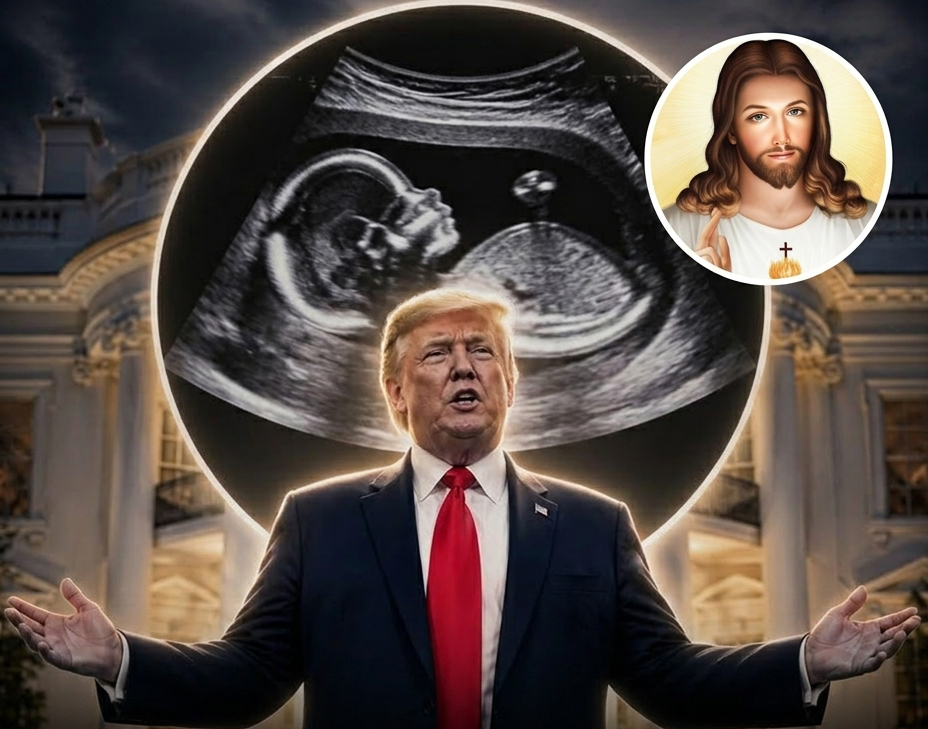
Have you ever wondered what it looks like when the most powerful man in the world decides to break a forty-seven-year tradition to stand in the cold with thousands of everyday citizens?
On a crisp, historic afternoon in the nation’s capital, the air wasn’t just filled with the winter chill—it was electric with a sense of unprecedented change. For decades, presidents had sent pre-recorded messages or waved from the safety of the Oval Office, but Donald Trump decided that “good enough” was no longer an option.
He didn’t just send his regards; he showed up. Why did he risk the political fallout to become the first sitting president in history to physically attend the March for Life? And what does his declaration that “every life is sacred” mean for the future of the country?
The Moment the Barrier Was Broken Forever
For nearly half a century, the March for Life has been a staple of the Washington D.C. landscape, a somber yet hopeful anniversary marking the Supreme Court’s Roe v. Wade decision. Year after year, hundreds of thousands of people—students, grandmothers, clergy, and families—marched past the windows of the White House.
While previous Republican presidents like Ronald Reagan and George W. Bush offered vocal support through phone calls or televised addresses, a physical appearance was always considered “too controversial” or “too much of a security risk.”
That all changed when the Marine One helicopter touched down. As President Trump stepped onto the stage at the National Mall, the roar of the crowd was deafening. It wasn’t just a political rally; it was a cultural earthquake.
By simply standing on that podium, Trump signaled to the world that the movement for the unborn was no longer being relegated to the sidelines of American discourse. He brought the full weight of the executive office to the pavement of the National Mall, turning a protest into a presidential event.
Every Child Is a Divine Gift: The Speech That Echoed Across the Nation
When the President finally took the mic, he didn’t lead with policy wonkery or legal jargon. Instead, he spoke directly to the heart of the matter. “All of us here today understand an eternal truth: Every child is a precious and sacred gift from God,” he declared. The crowd, draped in scarves and carrying hand-painted signs, erupted in cheers.
Trump’s rhetoric was intentionally designed to be clear and uncompromising. He spoke about the “unborn” not as a political talking point, but as human beings with potential, dreams, and a right to exist. He praised the mothers in the audience, the “heroic” work of pregnancy centers, and the young people who traveled on cramped buses for eighteen hours just to be heard. By framing the issue as a fundamental human right rather than a mere legislative debate, he elevated the conversation to a moral plane that resonated deeply with the diverse crowd gathered before him.
Radical Hope vs. Radical Politics: The President Takes Off the Gloves
In true Trump fashion, the speech wasn’t without its sharp edges. He took the opportunity to draw a stark contrast between the people standing in the cold and the “far-left” politicians in the halls of Congress. He criticized lawmakers who have pushed for late-term procedures, describing their positions as “radical” and out of touch with the American spirit.
This part of the address was a calculated move. By positioning himself as the defender of the “voiceless,” he reinforced his image as a fighter who isn’t afraid to take on the Washington establishment. He pointed to his record—appointing conservative judges to federal courts and protecting the conscience rights of doctors and nurses—as proof that his words weren’t just empty campaign promises. For the marchers, many of whom had felt abandoned by the political class for decades, this was the validation they had been waiting for.
A Sea of Youth: Why the “Pro-Life Generation” Is Winning the Heart of the President
One of the most striking aspects of the event, which the President highlighted repeatedly, was the age of the participants. While critics often paint the movement as one of the “older generation,” the National Mall was flooded with teenagers and college students. These are the “digital natives” who have grown up seeing high-definition ultrasounds on their smartphones, and the President made sure to speak directly to them.
He called them the “Pro-Life Generation,” praising their energy and their refusal to be silenced by a culture that often tells them to keep their beliefs private. By focusing on the youth, Trump wasn’t just talking about the present; he was investing in the future. He recognized that if the movement is to succeed long-term, it needs the passion and the tech-savvy nature of the youth to carry the torch forward. This youthful energy seemed to fuel the President’s own resolve, as he promised that his administration would never stop fighting for them.
The Global Impact: How One Speech Shook the International Stage
The ripples of Trump’s appearance traveled far beyond the borders of D.C. World leaders and international media outlets scrambled to cover the historic moment. In many ways, the President’s presence at the March for Life re-established the United States as a global leader in the conversation about the sanctity of life.
By declaring that every life is sacred, he challenged the international status quo. His administration’s policies, such as the Mexico City Policy which prevents U.S. taxpayer funding for organizations that perform or promote abortions overseas, were given a new, public face. For supporters abroad, the President’s walk on the National Mall was a beacon of hope; for critics, it was a provocative challenge to modern secular norms. Regardless of the viewpoint, one thing was certain: the world was forced to pay attention.
What Happens Next? The Legacy of the First Marching President
As the President finished his speech and the thousands of marchers began their trek toward the Supreme Court building, a new chapter in American history was effectively written. The question on everyone’s mind wasn’t just “What did he say?” but “What comes next?”
The legacy of this day isn’t just found in a transcript or a news clip. It’s found in the emboldened spirit of a movement that now knows the highest office in the land stands behind them. It’s found in the judicial appointments that will shape the legal landscape for a generation. Most importantly, it’s found in the President’s closing sentiment that “every person is made in the holy image of Almighty God.” Whether you are a supporter or a skeptic, there is no denying that the day a sitting president marched for life was the day the conversation changed forever. The silence of the White House has been replaced by a bold declaration, and the echoes are likely to be heard for many years to come.